

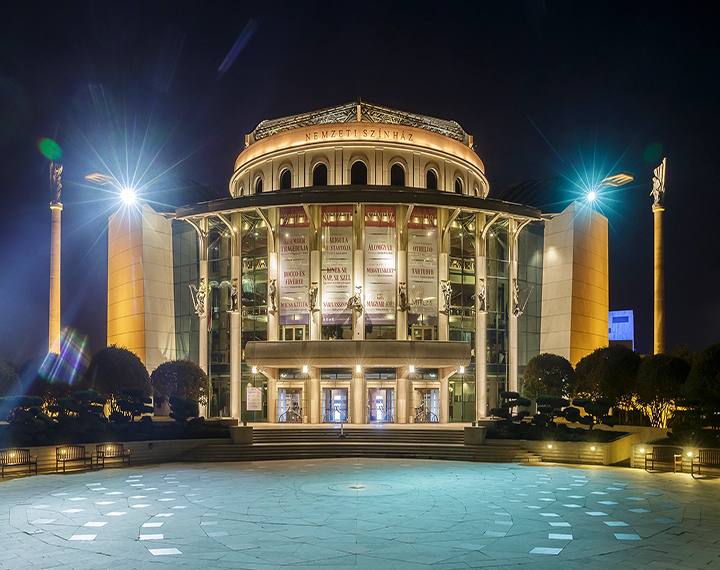
The National Theatre of Budapest stands as a bold architectural landmark on the banks of the Danube, serving as a cornerstone of the Millennium City Center in the 9th District. Opened in 2002, the building was designed by Mária Siklós and represents a dramatic departure from traditional neoclassical theater design, favoring an eclectic and symbolic aesthetic instead. Its position near the Rákóczi Bridge ensures that it is a prominent fixture of the city’s modern skyline, especially when illuminated at night, reflecting the vibrant evolution of Hungarian culture in the 21st century.
The exterior of the theater is surrounded by an equally captivating memorial park that functions as an open-air museum of Hungarian stage history. This lush green space features a variety of statues depicting legendary Hungarian actors in their most famous roles, alongside a unique reflecting pool that creates the illusion of the theater “floating” on the water. A particularly striking element is the Zikkurat, a spiral-shaped gallery and lookout tower, as well as the stylized “sunken” facade of the old National Theatre building, which serves as a poignant reminder of the institution’s long and turbulent history across different locations in the city.
Inside, the theater boasts world-class acoustics and highly versatile performance spaces, including a main auditorium that can accommodate over 600 spectators. The interior design is rich in detail, utilizing natural materials like wood and stone to create a warm yet grand atmosphere that honors the craft of acting. As the premier venue for drama in the country, it hosts a diverse repertoire ranging from classical Hungarian masterpieces to avant-garde international productions. Through its combination of daring architecture and a deep respect for theatrical tradition, the National Theatre remains a vital hub for artistic expression and national identity.



 Own or work here?