

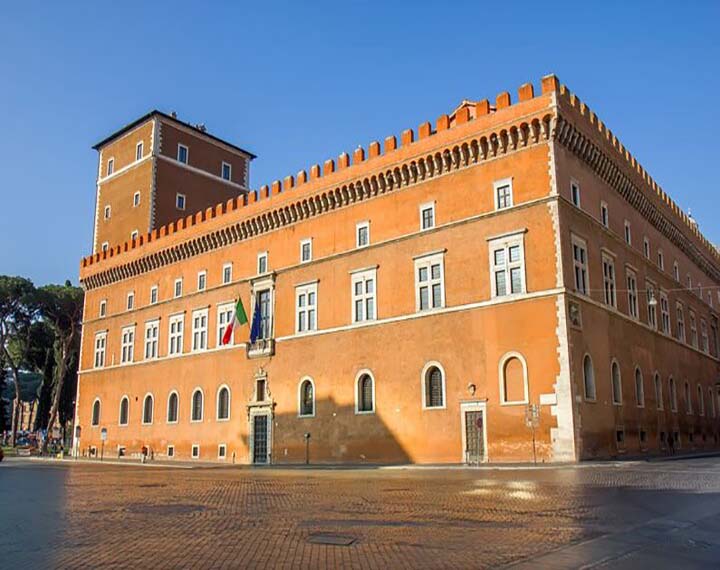
The Palazzo Venezia or Palazzo Barbo, formerly Palace of St. Mark, is a palazzo in central Rome, Italy, just north of the Capitoline Hill. The original structure of this great architectural complex consisted of a modest medieval house intended as the residence of the cardinals appointed to the church of San Marco. The National Museum of the Palazzo di Venezia in Rome stands as a magnificent testament to the city’s Renaissance heritage, housed within the imposing walls of a 15th-century palace originally built for Cardinal Pietro Barbo, who later became Pope Paul II. Constructed between 1455 and 1467, the palazzo served as a papal residence and the Venetian Republic’s embassy, blending fortified medieval strength with early Renaissance elegance in its battlemented facade and grand courtyards. Today, it anchors the bustling Piazza Venezia, drawing visitors into a world where history unfolds across echoing halls and lush gardens.
Established in 1921, the museum evolved from collections gathered from sites like Castel Sant’Angelo and the National Gallery of Ancient Art, focusing on medieval and Renaissance applied arts that showcase Italy’s artistic prowess. Highlights include exquisite small bronzes, vibrant enamels, intricate marbles, and delicate ceramics from the 14th to 16th centuries, alongside Byzantine icons, early Renaissance paintings by masters like Giorgione, and an array of weaponry and armor that evoke the era’s turbulent spirit. These artifacts, displayed across opulent rooms like the Sala del Mappamondo, offer an intimate glimpse into the lives of popes, cardinals, and diplomats who once walked these floors.
Beyond its collections, the Palazzo di Venezia carries layers of modern history, notably as Benito Mussolini’s headquarters during the Fascist era, where he delivered fiery balcony speeches to adoring crowds below. Though this chapter ended dramatically in 1943 with the regime’s fall, the site now promotes reflection on Italy’s past through temporary exhibitions and its adjacent library of archaeology and art history. A visit here transports you from Rome’s chaotic streets to serene terraces overlooking the eternal city, making it an essential stop for anyone seeking to connect with the threads of power, faith, and creativity that shaped Europe.



 Own or work here?