

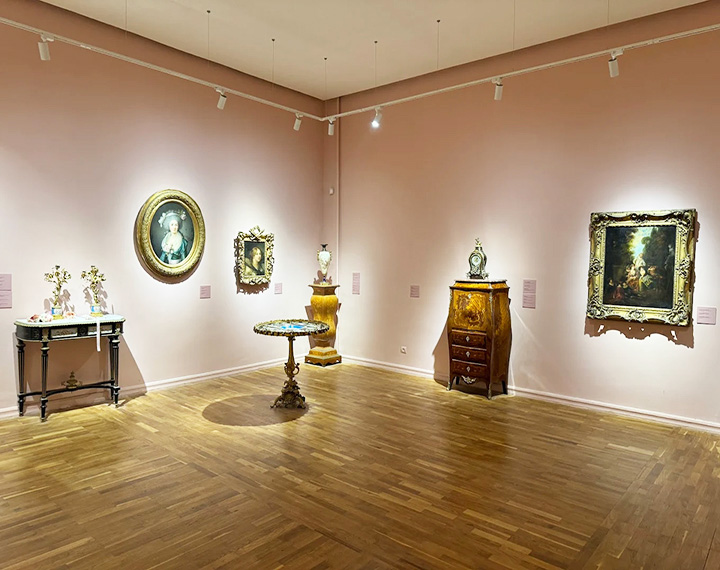
The National Gallery of Armenia stands as the crown jewel of the nation’s cultural landscape, housed in an iconic neoclassical building on Republic Square that it shares with the History Museum. As the largest art museum in the country, its vast collection spans over forty-thousand works, ranging from ancient and medieval Armenian frescoes to an impressive array of European, Russian, and Asian art. The gallery offers an incredibly refined and scholarly ambiance, where visitors can wander through fifty-six brightly lit halls that trace the journey of global culture. It is particularly renowned for its world-class collection of Armenian fine arts, including the luminous landscapes of Martiros Saryan and the evocative seascapes of Ivan Aivazovsky, alongside masterpieces by Donatello, Chagall, and Kandinsky.
The National Gallery of Armenia, located in Yerevan on Republic Square, stands as the country’s premier repository of fine art, encompassing both Eastern and Western traditions. Its extensive collection, which exceeds 40,000 works, traces the evolution of Armenian art from medieval illuminated manuscripts and frescoes to the modern era. The gallery’s strength lies in its ability to contextualize Armenian creativity within a broader global framework, featuring masterpieces by European icons such as Donatello, Tintoretto, and Courbet, alongside Russian realist works. This unique blend allows visitors to witness the cross-cultural dialogues that have shaped Armenian identity over centuries, making the gallery a vital bridge between local heritage and international artistic movements.
The heart of the gallery, however, beats with its unmatched collection of Armenian painting, offering a profound journey through the nation’s visual history. From the solemn, spiritual icons of the medieval period to the romantic landscapes of Ivan Aivazovsky, who, though of Armenian descent, achieved global fame for his seascapes, the narrative is deeply personal. The twentieth century is particularly well represented, with powerful works by Martiros Saryan, whose vibrant, colorful depictions of the Armenian landscape and daily life capture the nation’s resilient spirit. Subsequent halls display the evolving avant-garde and socialist realism periods, providing a comprehensive look at how Armenian artists navigated political and social upheavals while maintaining a distinctive cultural voice.
Today, the National Gallery of Armenia is not merely a museum but a living cultural institution that preserves and interprets the country’s artistic soul. It serves as a crucial educational resource for locals and tourists alike, offering a deeper understanding of Armenia’s historical triumphs and tragedies through its visual arts. The gallery’s serene, grand halls invite contemplation, while temporary exhibitions and restoration efforts ensure its collection remains dynamic and accessible. For any visitor to Yerevan, walking through the gallery’s three floors is an essential experience, revealing the beauty, endurance, and complexity of Armenian history as expressed by its most talented artists.



 Own or work here?