

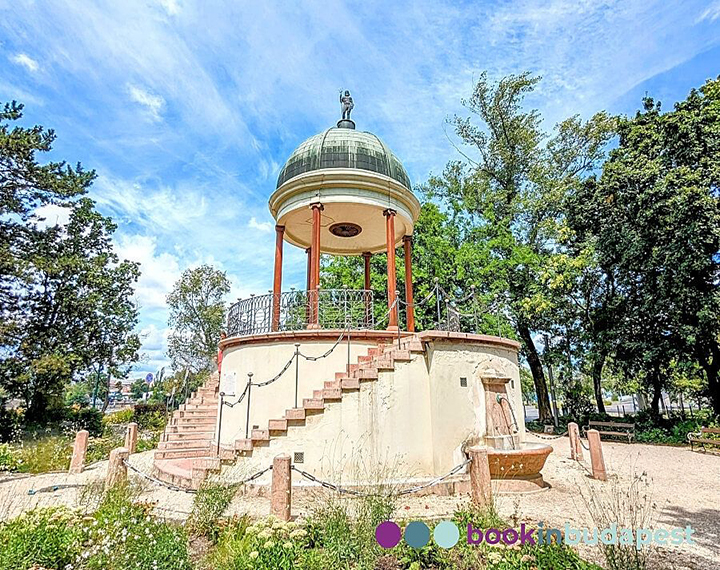
The Musical Well, situated at the northern end of Margaret Island in Budapest, is a charming architectural curiosity that serves as a faithful replica of an early 19th-century fountain. Originally designed by the Transylvanian polymath Péter Bodor in 1820, the structure is often referred to as the Bodor Well. While the original stood in Târgu Mureș, this meticulously reconstructed version was erected in 1936, featuring a circular pavilion topped with a copper dome and a gilded Neptune statue that rotates with the breeze. It stands as a testament to the intersection of mechanical ingenuity and Neoclassical aesthetics, providing a whimsical focal point amidst the island’s lush gardens.
What makes this structure truly captivating is its ability to blend visual beauty with a melodic atmosphere. True to its name, the well houses a hidden mechanical system that plays traditional Hungarian melodies at the top of every hour. The chimes are amplified across the surrounding lawn, creating a serene environment where visitors often pause their walks to listen. The integration of a functioning clockwork mechanism within such an ornate stone and timber frame highlights the historical fascination with “automata”—machines designed to mimic life or art through complex internal gearing.
Beyond its musical performance, the well serves as a symbol of the peaceful, restorative character of Margaret Island. Surrounded by flower beds and ancient trees, it offers a nostalgic glimpse into Budapest’s past, far removed from the noise of the modern metropolis. Whether one is visiting to admire the intricate wood carvings of the pavilion or to wait for the next hourly chime, the Musical Well remains a beloved landmark. It successfully bridges the gap between a functional hydraulic monument and a living piece of musical heritage, ensuring that the legacy of Péter Bodor’s craftsmanship continues to delight new generations.



 Own or work here?