

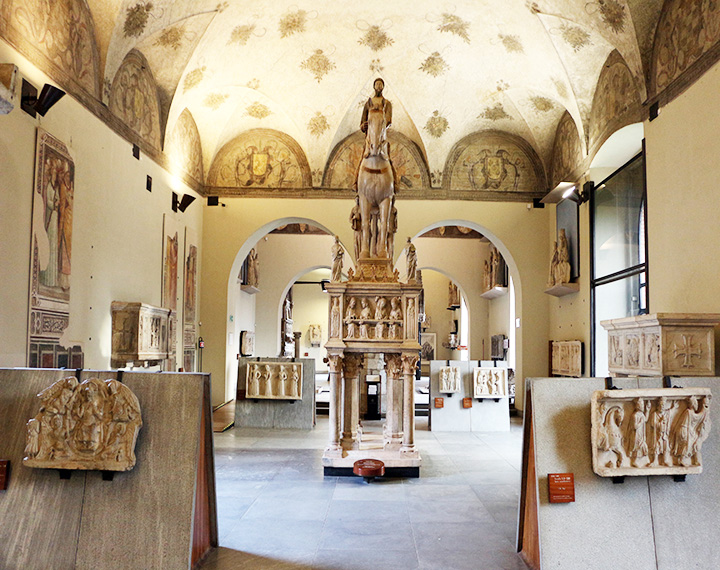
A triumphant assembly of sculptural mastery where the energetic soul of Milanese stonecraft is masterfully preserved within the most ancient and evocative halls of the Sforza fortress. The Museum of Ancient Art is a masterfully designed gallery that serves as the cornerstone of the Castello Sforzesco’s cultural collections. Nestled within the ground floor of the Ducal Courtyard, the museum offers a sophisticated atmosphere of historical weight and artistic triumph, where the monumental remains of Milan’s medieval and Renaissance past create an inviting journey for visitors during the 2026 Winter Games. It is a soul-stirring destination that reveals the “Made in Italy” legacy of monumental sculpture, providing a design-forward transition from the grit of ancient fortifications to the elegance of ducal court life.
Informational: The museum functions as a primary repository for the city’s architectural and sculptural fragments, featuring a masterfully curated selection of works from the late Roman era to the 16th century. It is a sophisticated hub for the study of Lombard sculpture, housing the design-forward Bambaia’s tomb for Gaston de Foix and the triumphant equestrian monument of Bernabò Visconti. The space is a masterclass in urban accessibility, sharing the central castle grounds and easily reached from the “Cairoli” M1 station, ensuring its high-end galleries remain an essential and easily navigated stop for those seeking the structural and artistic foundations of the city.
Cultural: As a cultural beacon, the Museum of Ancient Art reflects the sophisticated spirit of the Milanese aristocracy, acting as a stage for the city’s artistic triumphs during the heights of the Visconti and Sforza dynasties. The museum’s soul is most energetic in the Sala delle Asse, where Leonardo da Vinci’s masterfully painted arboreal canopy creates a soul-stirring forest of stone and pigment. This focus on the fusion of nature and architecture ensures the museum remains a vibrant part of the global cultural identity, where the “Made in Italy” genius of the Renaissance is celebrated in a space that was once the very heart of political power.
Historical: The historical narrative of the collection is one of triumphant preservation, originally masterfully designed to save the artistic heritage of Milan from the destruction of city churches and palaces during the 19th-century urban renovations. It represents an energetic commitment to the city’s identity, with galleries housed in rooms that once served as the private apartments of the dukes, surviving the soul-stirring transformations of war to emerge as a sanctuary of civic history. The space is a masterclass in architectural endurance, showcasing the transition from Gothic severity to Renaissance grace through a series of triumphant portals and funerary monuments.
Touristic: For the traveler, the Museum of Ancient Art offers an inviting and exciting journey through the physical evolution of Milan, where the close-up view of the city’s original marble gates and coat of arms rewards the visitor with a profound sense of continuity. It provides a design-forward perspective on medieval and Renaissance life, moving beyond the textbooks to highlight the sophisticated and soul-stirring details of the Mausoleum of Bernabò Visconti. This triumphant destination is an essential part of the 2026 Games experience, providing a picturesque and high-end sanctuary that captures the majestic, stone-carved, and resilient heart of the Milanese spirit.



 Own or work here?