

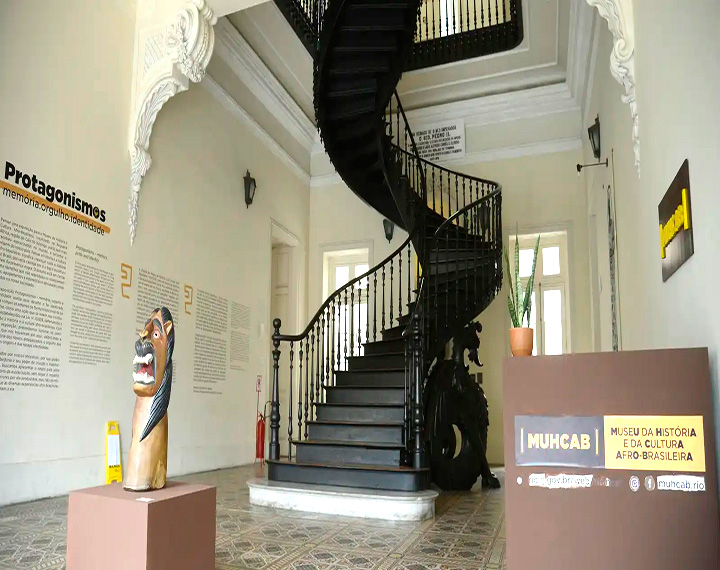
The MUHCAB – Museu da História e da Cultura Afro-Brasileira (Museum of Afro-Brazilian History and Culture) is a truly unique institution in Rio de Janeiro. It’s more than just a building with exhibits; it’s an experience that connects with the very soul of the city. Created in 2017, MUHCAB is a hybrid museum that combines different approaches to tell its story. It functions as an open-air museum, a territory museum, and a socially responsible museum. Its mission is to be a living, breathing space that promotes and preserves Afro-Brazilian memory, history, and culture. It aims to highlight the immense role that people of African descent have played in the social and cultural formation of both Rio and Brazil as a whole.
The museum’s physical location is the former José Bonifácio School, and its very existence is a powerful statement. Its focus extends beyond its walls to include the surrounding neighborhood of Gamboa, known as “Little Africa,” which was a hub of Afro-Brazilian life and is home to other significant sites like the Valongo Wharf. MUHCAB’s collection is both traditional and “territorial.” The museological collection inside the building features a rich array of paintings, sculptures, and photographs that tell the story of the Afro-Brazilian experience. You can see works by celebrated artists, including sculptures representing the Orixás from Afro-Brazilian religions, and photographic collections like the one by famous actress Ruth de Souza.
What makes MUHCAB truly special is its territorial collection, which uses the historical sites around the museum as part of its narrative. This includes the nearby Valongo Wharf, a UNESCO World Heritage site and the largest slave port in the Americas, and Pedra do Sal, the birthplace of Carioca samba. By doing this, the museum creates a living dialogue between its indoor exhibits and the historical memory of the streets outside. The museum also hosts engaging temporary exhibitions and events, with its patio often becoming a stage for samba circles, jongo, and other vibrant Afro-Brazilian rhythms. It’s a place where history isn’t just displayed—it’s celebrated and lived.



 Own or work here?