

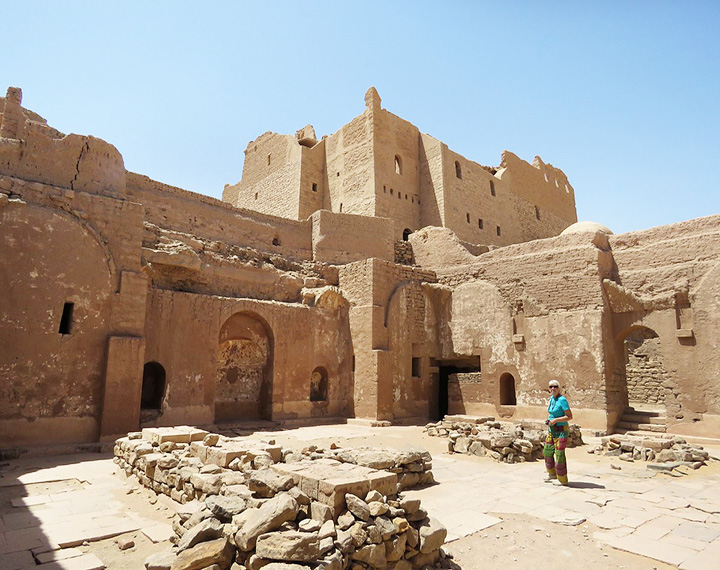
A desert fortress of faith standing as a sentinel over history. The Monastery of St. Simeon is one of the largest and best-preserved Coptic desert monasteries in Egypt, dating back to the 7th century. Located on a hill on the West Bank across from Aswan, its massive mud-brick and stone walls give it the appearance of a formidable fortress. Exploring its vast ruins offers an incredible journey into the lives of the early Christian monks who sought spiritual solitude in this remote environment.
As you wander through the two-level complex, you can see the remains of the main church, the living quarters, and the ancient kitchens where bread was once baked for hundreds. The walls of the lower church still bear fragments of intricate frescoes depicting saints and religious scenes, providing a beautiful glimpse into early Christian art. The silence within the vaulted halls creates a peaceful atmosphere that invites contemplation and wonder at the resilience of the human spirit.
The climb to the monastery is often done by camel or on foot, offering an adventurous and scenic trek through the golden dunes of the Sahara. Reaching the summit, visitors are rewarded with breathtaking views of the lush Nile valley contrasting sharply with the surrounding arid wilderness. It is a place where the natural and the spiritual worlds meet in a powerful and visually stunning harmony.
Archaeological insights throughout the site explain the strategic layout of the monastery, which was designed to be self-sufficient and protected from desert raids. You can explore the ancient oil presses and storage rooms, gaining a tangible sense of the community’s daily survival and devotion. The scale of the construction is a testament to the importance of this site during the height of the Christian era in Egypt.
A visit to St. Simeon provides a fascinating and uplifting chapter in the cultural story of Aswan, highlighting its role as a crossroads of faiths and civilizations. The site remains a quiet and majestic landmark, offering a unique perspective on the history of the Nile’s western shores. It is an essential stop for anyone wishing to experience the raw beauty and the deep-rooted history of the Egyptian desert.



 Own or work here?