

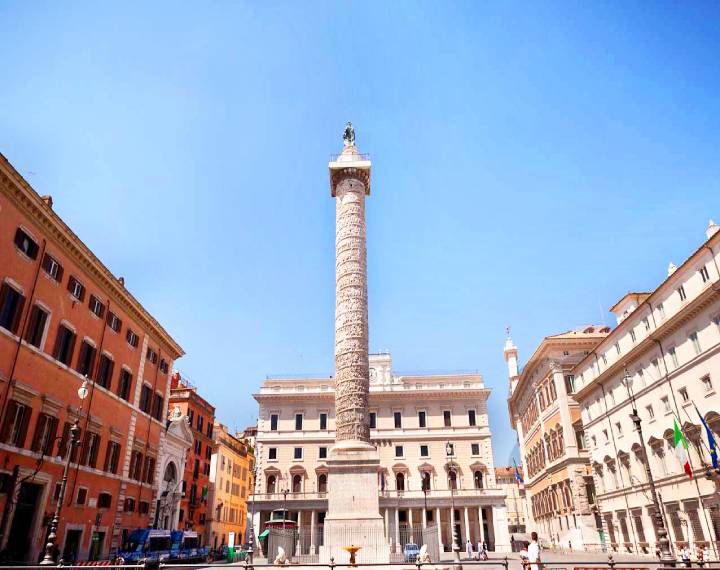
Carved military scenes line this 2nd-century AD marble column, honouring Marcus Aurelius’ victories. The Column of Marcus Aurelius, a towering monument in Rome’s Piazza Colonna, stands as a testament to the Roman emperor’s military triumphs and philosophical legacy. Erected between 180 and 193 CE, this Doric column, inspired by Trajan’s Column, reaches approximately 100 feet, adorned with a spiral relief depicting Marcus Aurelius’ victorious campaigns against Germanic and Sarmatian tribes. The intricate carvings narrate the emperor’s Marcomannic Wars, showcasing Roman military prowess and the emperor’s stoic leadership.
The column’s detailed frieze, winding 21 times around the shaft, captures vivid scenes of battles, sieges, and the emperor addressing his troops, offering a glimpse into Roman warfare and imperial propaganda. Originally topped with a bronze statue of Marcus Aurelius, now replaced by a statue of St. Paul in the 16th century, the column reflects both Rome’s grandeur and its evolving cultural landscape. Despite weathering and some damage over centuries, the reliefs remain a remarkable historical record, drawing scholars and visitors to study its artistry and narrative.
Standing in the heart of Rome, the column not only commemorates Marcus Aurelius’ reign but also embodies his Stoic philosophy of duty and resilience. Unlike Trajan’s Column, it emphasizes the emperor’s personal leadership and moral character, aligning with his Meditations, written during the same campaigns. Today, it remains a striking symbol of Rome’s imperial past, blending history, art, and philosophy in stone.



 Own or work here?