

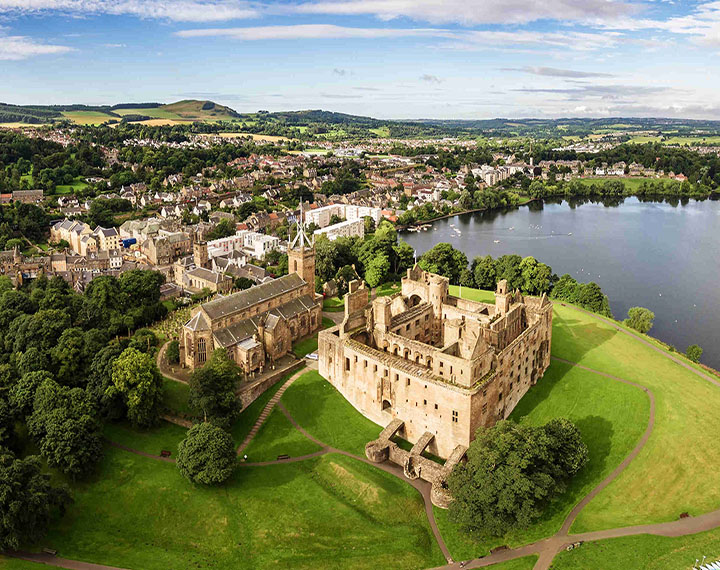
Linlithgow Palace, located in West Lothian, Scotland, is a stunning historic ruin that once served as a favored royal residence for the Scottish monarchy. Built and expanded over two centuries by the Stewart kings, it gained renown as a “pleasure palace” strategically positioned between Edinburgh and Stirling Castles. It is famously known as the birthplace of Mary, Queen of Scots, in 1542. The palace showcases impressive Renaissance architecture, including the grand Great Hall built for James I, royal apartments added by James IV, and a remarkable three-tiered courtyard fountain installed by James V.
Today, Linlithgow Palace is open to visitors who can explore its evocative ruins and enjoy insights into Scotland’s royal past. Highlights include Queen Margaret’s Bower, which offers sweeping views over the palace grounds and the adjacent Linlithgow Loch. Visitors can also wander through the remains of the royal apartments and admire the impressive fountain in the courtyard. The surrounding parkland, known as Linlithgow Peel, provides a peaceful setting for walks and wildlife watching. Throughout the year, the palace hosts lively events such as jousting tournaments and heritage trails, making it a dynamic destination for history lovers and families alike.
The palace is easily accessible by public transport, with regular trains connecting Linlithgow to both Edinburgh and Glasgow. There is on-site parking available, though visitors are advised to check for any restrictions or seasonal closures before planning their trip. Admission fees apply, with concessions offered for children and certain groups. Some areas of the palace may occasionally be closed for conservation work, but the site remains a captivating glimpse into Scotland’s royal heritage and architectural splendor.



 Own or work here?