

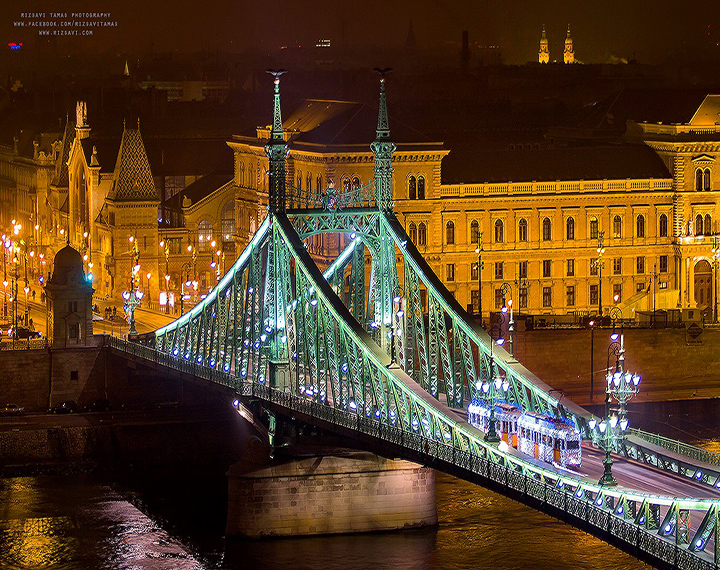
Liberty Bridge is arguably the most elegant crossing in Budapest, recognized by its distinctive green hue and ornate ironwork that characterizes the Belle Époque. Originally inaugurated as the Franz Joseph Bridge in 1896 for the Millennium Exhibition, it was designed by János Feketeházy to facilitate easy travel between the bustling market of Pest and the thermal heights of Buda. Despite being destroyed during the final months of World War II, the bridge was the first to be reconstructed in its original form, serving as a powerful symbol of the city’s restoration and renewed spirit of freedom.
The architecture of the bridge is a triumph of the Art Nouveau movement, featuring soaring pylons topped with bronze statues of the Turul, a mythical bird from Hungarian folklore. These majestic figures, perched on golden balls, seem to keep a watchful eye over the flowing river and the pedestrians passing below. The delicate latticework of the iron trusses creates a sense of airy lightness that belies the bridge’s structural strength, making it one of the most photographed and beloved engineering feats in Central Europe.
Culturally, the bridge has become a focal point for modern urban life, frequently serving as a venue for open-air yoga sessions, picnics, and acoustic concerts during summer weekend closures. It acts as a literal and figurative link between the academic energy of the Corvinus University and the historical tranquility of the Gellért Hill cave church. This vibrant social atmosphere transforms the historic structure into a living community space where tourists and locals alike gather to watch the sunset over the Buda hills, creating a shared sense of belonging in the heart of the city.
For tourists, Liberty Bridge offers a scenic and accessible route to some of the capital’s most iconic landmarks, including the Central Market Hall and the Gellért Thermal Bath. The bridge’s relatively short length makes it an ideal spot for a leisurely stroll, providing unobstructed views of the Elizabeth Bridge to the north and the grand facade of the university to the south. In the evening, the bridge is beautifully illuminated, its green silhouette glowing against the dark waters of the Danube, offering a romantic and serene experience that captures the essence of Budapest’s nightscape.
The atmosphere on the bridge is one of uplifting charm and historic grandeur, where the rattle of the iconic yellow trams crossing the tracks adds a nostalgic soundtrack to the journey. As you walk along the wooden-planked footpaths, the scent of the river and the gentle breeze create a refreshing environment for reflection. It is a place that celebrates both the technological ambition of the past and the creative freedom of the present, ensuring that every crossing is not just a transit, but a beautiful and inspiring encounter with the soul of the city.



 Own or work here?