

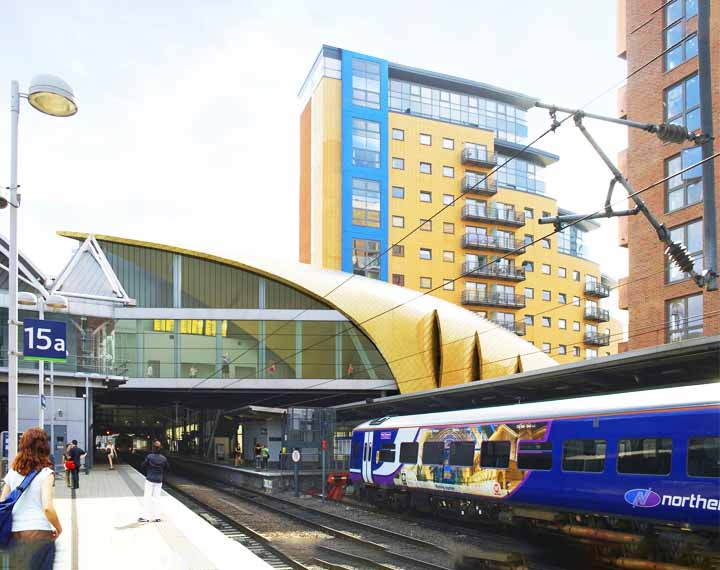
Leeds Train Station, officially known as Leeds City Station, is a major railway hub in West Yorkshire, England, and one of the busiest outside of London. Its history is a complex tapestry of multiple smaller stations being combined and rebuilt over centuries, with the first railway in Leeds dating back to a wooden wagon-way in 1758. The current station largely stems from the 1938 merger of the adjacent Wellington and New Stations, forming what was then known as Leeds City Station, and a significant rebuild in 1967 when Leeds Central Station closed and its services were integrated.
Architecturally, Leeds Station is a fascinating blend of eras. The historic “Dark Arches” are a prominent feature, referring to the Victorian brick-vaulted arches that support much of the station above the River Aire and Leeds and Liverpool Canal. These arches, once used for industrial storage, now house various businesses, contributing to the station’s unique character. The North Concourse, restored in the early 2000s, boasts an impressive Art Deco design with a coffered ceiling and stylish lighting, a testament to its 1930s origins. More recently, the station has seen modern additions like the striking Southern Entrance, a curved glass and gold-shingled structure that provides a contemporary gateway to the city’s South Bank.
As a vital transport interchange, Leeds Station serves over 30 million passengers annually, making it a critical link in the national rail network. It offers high-speed services to London, inter-city connections to major destinations across Northern England like Manchester, Liverpool, Newcastle, and Sheffield, and is the terminus for the scenic Settle to Carlisle Line. The station is also the central hub for the West Yorkshire commuter network, with ongoing upgrades aimed at increasing capacity, improving reliability, and enhancing the overall passenger experience, including plans for longer platforms and electrification projects.



 Own or work here?