
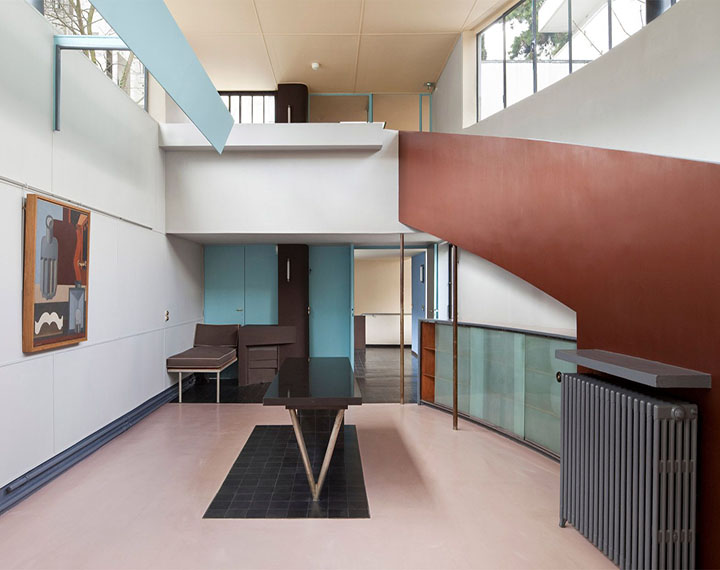
Le Corbusier and Pierre Jeanneret House No. 2, part of the Weissenhof Estate in Stuttgart, Germany, is a seminal piece of modernist architecture. This house, along with its twin House No. 1, was designed by the Swiss-French architect Le Corbusier in collaboration with his cousin, Pierre Jeanneret. Built in 1927 for the Deutscher Werkbund exhibition, the house is a quintessential example of the International Style and embodies the innovative design principles that Le Corbusier advocated.
The primary function of House No. 2 was to serve as a prototype for modern urban living. Le Corbusier’s design emphasized functionality, simplicity, and the use of new materials and construction techniques. The house features an open floor plan, flat roof, horizontal windows, and a reliance on steel and concrete. These elements were groundbreaking at the time and aimed to provide affordable, efficient, and healthy living spaces for the urban population. The house’s design also included a roof garden and flexible interior spaces, reflecting Le Corbusier’s belief in integrating nature and accommodating the changing needs of residents.
Historically, House No. 2 is significant as it represents a radical departure from traditional residential architecture. The Weissenhof Estate was a collaborative effort involving several leading modernist architects, and it played a crucial role in the development and dissemination of modernist architectural ideas. Le Corbusier’s contributions to the estate, particularly House No. 2, demonstrated his Five Points of Architecture, which became fundamental tenets of modernist design. These include the use of pilotis (supports), a free facade, an open floor plan, horizontal windows, and a roof garden.
Today, House No. 2, along with the rest of the Weissenhof Estate, is recognized as a UNESCO World Heritage site. It serves not only as a residential building but also as a museum and educational resource. Visitors to the house can explore its innovative design features and learn about the history and impact of modernist architecture. The house remains a testament to Le Corbusier and Pierre Jeanneret’s visionary approach to design and their influence on the evolution of architectural practice in the 20th century.



 Own or work here?