

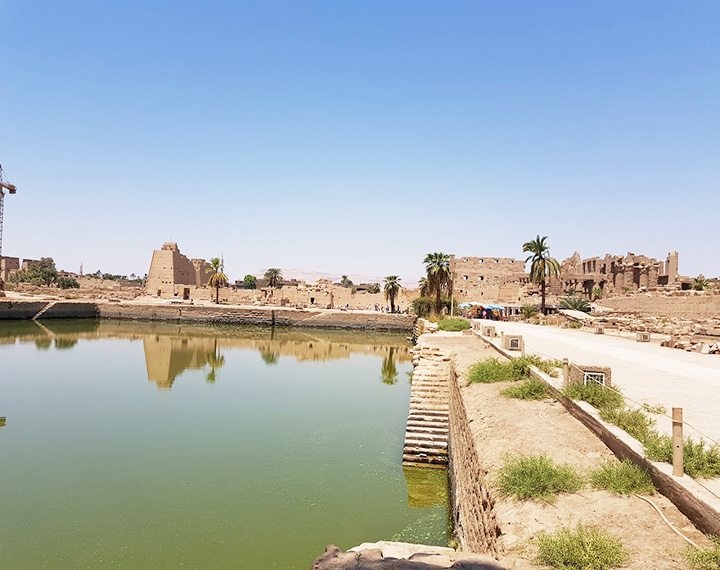
A vast stone forest of pillars where the gods once dwelled. The complex is a labyrinth of history, where every stone and inscription tells a story of royal ambition and divine devotion. Exploring the Open Air Museum reveals beautifully reconstructed chapels, such as the White Chapel of Senusret I, which showcases the exquisite precision of Middle Kingdom relief carving. The sacred lake, once used by priests for ritual purification, remains a tranquil mirror reflecting the surrounding ruins and the bright Egyptian sky. It is a place where the scale of human achievement feels truly boundless, fostering an uplifting sense of wonder at the endurance of the ancient spirit.
The sheer size of the site allows for a journey of endless discovery, from the towering obelisks of Queen Hatshepsut to the detailed botanical carvings in the festive hall of Thutmose III. Every corner of the temple reveals new layers of architectural evolution, showcasing the transition from the Old Kingdom through to the Greco-Roman period. The atmosphere is one of profound historical weight and creative energy, inviting travelers to lose themselves in the epic narrative of a civilization that aimed for eternity. The carefully preserved pathways ensure that the grandeur of the site is accessible to all who seek to walk in the footsteps of the ancients.
As evening approaches, the temple complex becomes the stage for a dramatic Sound and Light show that illuminates the pylons and narrates the legends of the Theban gods under the stars. The interplay of shadow and golden light on the massive stone faces of the pharaohs creates a magical environment that is deeply resonant and memorable. This nocturnal perspective highlights the mystical qualities of the sanctuary, offering a multisensory experience that connects the modern visitor with the sacred mysteries of the past. It is a highlight of any Egyptian pilgrimage, providing a powerful testament to the artistic and spiritual heights of the Nile Valley.
A visit to Karnak is an essential and transformative experience, standing as a proud symbol of Egypt’s cultural legacy and its role as a beacon of ancient wisdom. The dedication of generations of architects and artisans is visible in every precisely cut block and soaring architrave. It remains a cherished world heritage site that continues to inspire and educate millions of guests from around the globe. Stepping through its gates is more than a tour; it is an immersion into a monumental vision of the divine that has survived the rise and fall of empires.



 Own or work here?