

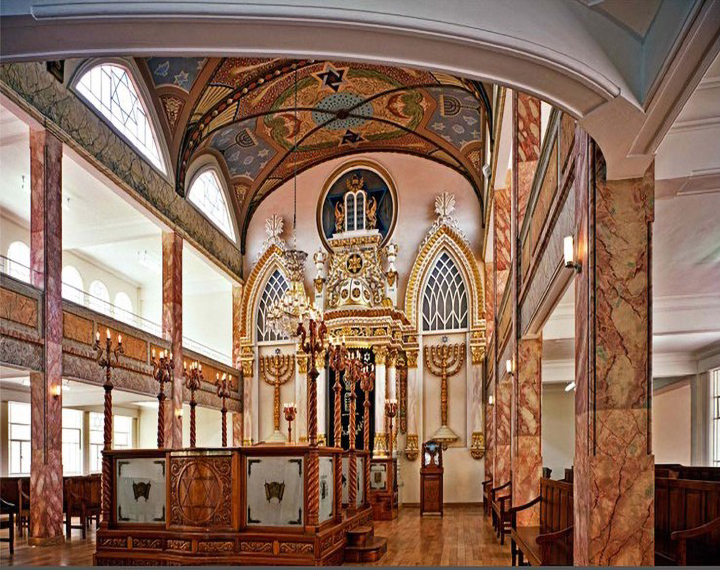
The Historic Synagogue Justo Sierra 71 (also known as Sinagoga Nidjei Israel) is one of the most beautiful and historically significant Jewish houses of worship in Mexico City. Built in 1941 for the Ashkenazi Jewish community and restored in the 21st century as both a cultural centre and synagogue, it stands out for its neo‑colonial‑Romanesque revival architecture and rich interior symbolisms reflecting Jewish heritage. It is open to the public for visits and cultural events.
The Justo Sierra 71 Historic Synagogue, officially known as Nidjei Israel, is a hidden cultural gem nestled in the heart of Mexico City’s Historic Center. Built in 1941 by Ashkenazi Jewish immigrants who fled persecution in Eastern Europe, it stands as the first and only historic synagogue in the city that has been meticulously restored and opened to the general public. While its unassuming, neo-colonial facade was intentionally designed to blend seamlessly with the surrounding neighborhood architecture, stepping inside reveals a breathtaking contrast of religious artistry and cultural heritage that transports visitors straight back to the mid-20th century.
Upon entering, the interior unfolds into a stunning architectural marvel inspired by the grand synagogues of Shavel, Lithuania. The sanctuary features a magnificent double-height ceiling, an intricately carved wooden Ark where Torah scrolls were once kept, and vibrant stained-glass windows that bathe the space in a warm, colorful glow. Every detail, from the ornate balconies originally reserved for women to the beautifully preserved chandeliers and murals, reflects a deep nostalgia for the European homeland the community left behind, blended with a profound gratitude for the sanctuary they found in Mexico.
Today, the Justo Sierra 71 Synagogue no longer operates as a regular house of worship, but instead thrives as a vibrant cultural center and museum. It serves as a vital bridge between the past and the present, hosting a rich array of concerts, art exhibitions, literary events, and guided tours that celebrate both Jewish traditions and Mexican multiculturalism. By preserving this sacred space, it offers a powerful testament to the resilience, identity, and integration of the Jewish immigrant community within the broader tapestry of Mexican history.



 Own or work here?