

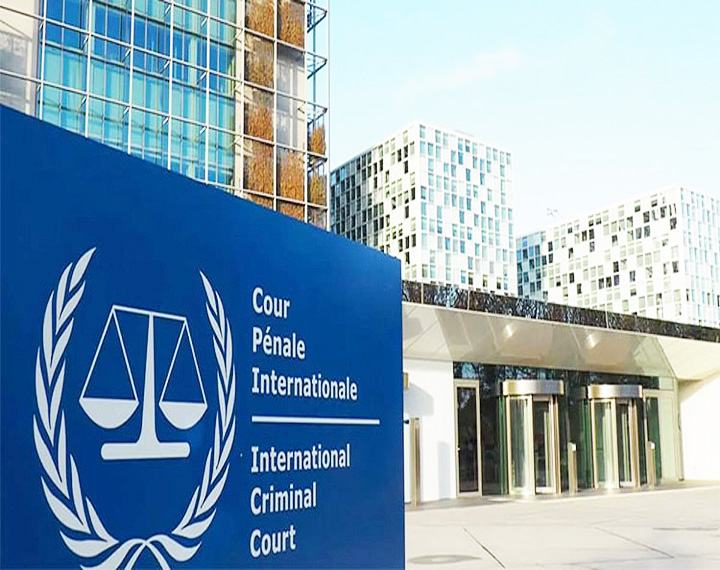
The International Criminal Court (ICC) is a permanent international tribunal established to prosecute individuals responsible for the most serious crimes, including genocide, crimes against humanity, war crimes, and the crime of aggression. It differs from the International Court of Justice (ICJ), which settles disputes between countries, as the ICC focuses on holding individuals accountable for crimes that affect global peace and security.
The ICC was created through the Rome Statute, which was adopted on July 17, 1998. It officially began operating on July 1, 2002, with its headquarters in The Hague, Netherlands. The court was established to ensure justice for grave crimes that often go unpunished in national legal systems. It serves as a court of last resort, intervening only when countries are unable or unwilling to prosecute criminals themselves.
Located in The Hague, a city known for international law and justice, the ICC investigates and prosecutes cases brought before it. Cases can be referred to the ICC by member states that have ratified the Rome Statute, the United Nations Security Council, or the ICC Prosecutor, who can initiate investigations independently. However, the ICC does not have its own police force and relies on member states to enforce its decisions, including arresting suspects.
As of recent years, 123 countries have ratified the Rome Statute and are members of the ICC. However, several major powers, including the United States, China, and Russia, have not joined the court. The ICC has jurisdiction over crimes committed in member states or by individuals from member states, unless a case is referred to it by the UN Security Council, in which case its jurisdiction can extend beyond its member states.
Over the years, the ICC has handled several high-profile cases. Notable convictions include Thomas Lubanga, a Congolese warlord convicted for using child soldiers, and Dominic Ongwen, a former commander of the Lord’s Resistance Army in Uganda, who was found guilty of war crimes and crimes against humanity. Other cases, such as that of former Central African Republic leader Jean-Pierre Bemba, resulted in initial convictions that were later overturned.
Despite its mission to uphold justice, the ICC has faced criticism and challenges. Some argue that it disproportionately targets African leaders, as many of its cases have involved African nations. Others question its effectiveness, as powerful non-member states like the United States and Russia refuse to recognize its authority. Additionally, the ICC’s lack of its own enforcement mechanism makes it reliant on the cooperation of states, which sometimes refuse to comply with arrest warrants and court rulings.
Although the ICC has made significant contributions to international justice, its future effectiveness depends on greater global cooperation and support. The court remains an important institution for addressing crimes that threaten human rights and global stability, despite the legal and political obstacles it faces.



 Own or work here?