

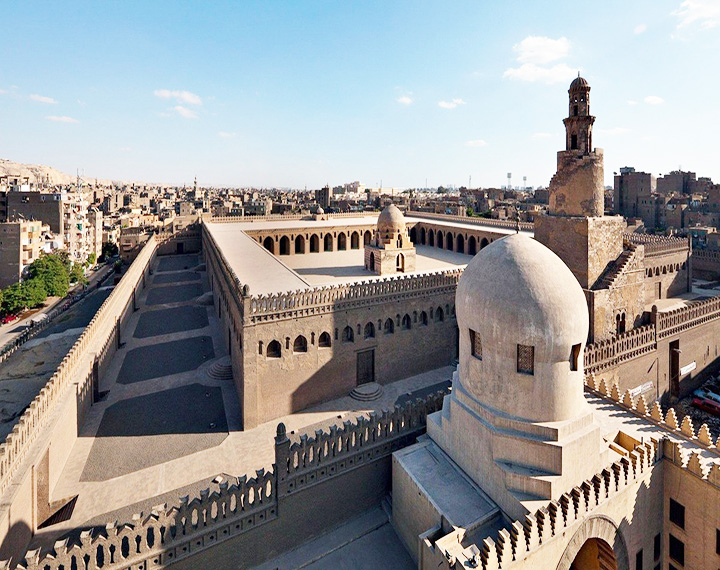
An ancient sanctuary of brick and spirit standing timeless in Cairo. As the oldest mosque in the city surviving in its original form, the Mosque of Ibn Tulun is a magnificent masterpiece of early Islamic architecture that has graced Cairo since the ninth century. Commissioned by Ahmad ibn Tulun, the governor who founded the Tulunid dynasty, this vast sanctuary was designed to be the crown jewel of a new administrative capital. Its distinctive red brick construction and massive scale create an atmosphere of profound permanence, offering a serene escape where history feels alive in every weathered corner.
The architectural language of the mosque is a beautiful conversation between Egyptian tradition and the artistic influences of the Abbasid capital in Samarra. One of its most captivating features is the unique spiral minaret, which features an external staircase winding toward the sky in a silhouette unlike any other in Egypt. This design not only serves a functional purpose but also acts as a poetic symbol of a soul’s ascent toward the divine, providing those who climb its heights with a breathtaking panoramic view of the historic city.
Stepping into the enormous central courtyard, visitors are met with a sense of immense openness and geometric harmony. The space is framed by elegant pointed arches supported by sturdy brick piers, a pioneering structural choice that prefigures the evolution of later architectural styles across the globe. The delicate stucco carvings that adorn the windows and friezes display intricate floral and geometric motifs, showcasing the high level of craftsmanship that flourished during this golden era of cultural and artistic independence.
The mosque is built upon a legendary limestone hill known as Gebel Yashkur, or the Hill of Thanksgiving, which adds a layer of spiritual mystery to its foundation. Local lore suggests this sacred ground is where Noah’s Ark finally came to rest, connecting the site to a much older tapestry of human history and faith. This sense of ancient narrative, combined with the rhythmic pattern of the arcades, creates a quiet dignity that invites travelers to linger and reflect on the enduring nature of human creativity and devotion.
Walking through the shaded aisles of the prayer hall, the soft play of light through the carved screens illuminates the simple beauty of the sanctuary. It remains an active place of worship today, serving the vibrant community of the surrounding neighborhood while welcoming curious minds from around the world. To visit this landmark is to witness a survivor of empires and ages, a place that continues to radiate an uplifting energy and a timeless message of peace and architectural brilliance.



 Own or work here?