

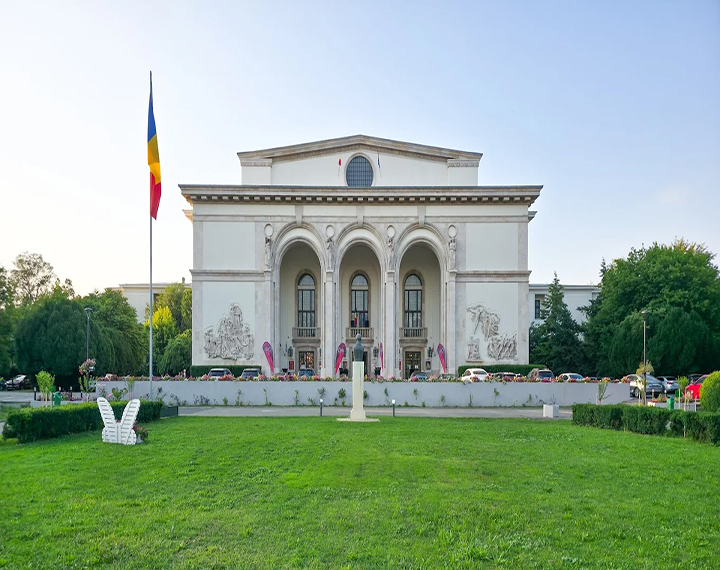
A Neo-Renaissance jewel of Andrássy Avenue, where golden opulence meets the timeless melodies of masters. A magnificent architectural masterpiece designed by Miklós Ybl, standing as one of the most beautiful opera houses in the world since its opening in 1884. Situated on the prestigious Andrássy Avenue, its facade is adorned with statues of famous composers, including Ferenc Erkel and Franz Liszt, welcoming guests into a realm of imperial grandeur. The building was commissioned by Emperor Franz Joseph I with the condition that it would not be larger than the Vienna Opera House, though many argue its intricate detail and superior acoustics made it even more spectacular. Features a breathtaking horseshoe-shaped auditorium with a three-ton bronze chandelier and a stunning ceiling fresco by Károly Lotz depicting the Greek gods on Olympus.
Boasts world-class acoustics that are ranked among the best in Europe, providing an unparalleled auditory experience for both opera and ballet performances.
The grand foyer and symmetrical staircases are decorated with rare marble, gold leaf, and delicate murals, reflecting the height of nineteenth-century Austro-Hungarian wealth. Culturally, the opera house is the spiritual home of the Hungarian National Ballet and the State Opera company, serving as a bastion of high art for over a century. It has hosted legendary directors and performers, including Gustav Mahler, who served as the institution’s director and elevated its musical standards to a global level. Even during the most turbulent periods of the twentieth century, the house remained a symbol of Hungarian artistic resilience and sophisticated urban culture, continuing to debut world-class productions that honor both classical traditions and modern innovations.
The Royal Box remains a centerpiece of the auditorium, offering a glimpse into the aristocratic heritage of the venue’s founding era. Regularly hosts the annual Opera Ball, a prestigious social event that gathers the elite of the international arts and cultural scene. Guided tours offer access to the elegant Red Salon and the royal reception rooms, which are otherwise closed to the general public during performances. For tourists, visiting this landmark provides a sensory journey through the “Golden Age” of Budapest, whether attending a world-class performance or taking a specialized architectural tour. The building’s recent extensive restoration has returned its original luster, from the shimmering gold leaf on the proscenium arch to the intricate carvings of the royal entrance. Its central location makes it a perfect anchor for an evening of cultural exploration, surrounded by the historic palaces and high-end boutiques that define the city’s most elegant boulevard.
Offers daily guided tours in multiple languages that include a short “mini-concert” by an opera singer on the grand staircase. The surrounding area is filled with historic cafes and fine dining establishments, perfect for a pre-theater dinner or a post-show glass of Hungarian wine. Highly accessible via the historic M1 Millennium Underground, with the Opera station conveniently located directly in front of the building. The ambiance of the Opera House is one of refined elegance and hushed anticipation, where the scent of old wood and velvet mingles with the excitement of a premiere. As the lights dim and the massive chandelier rises toward the frescoed ceiling, the space transforms into a magical theater of dreams. It is a place where every guest feels part of a long-standing royal tradition, leaving with an uplifted spirit and a profound appreciation for the artistic heights achieved by the Hungarian nation. Strict dress codes for evening performances encourage a sophisticated and formal atmosphere that enhances the sense of occasion. The on-site souvenir shop offers unique musical recordings, elegant programs, and artisanal gifts inspired by the building’s architecture.



 Own or work here?