

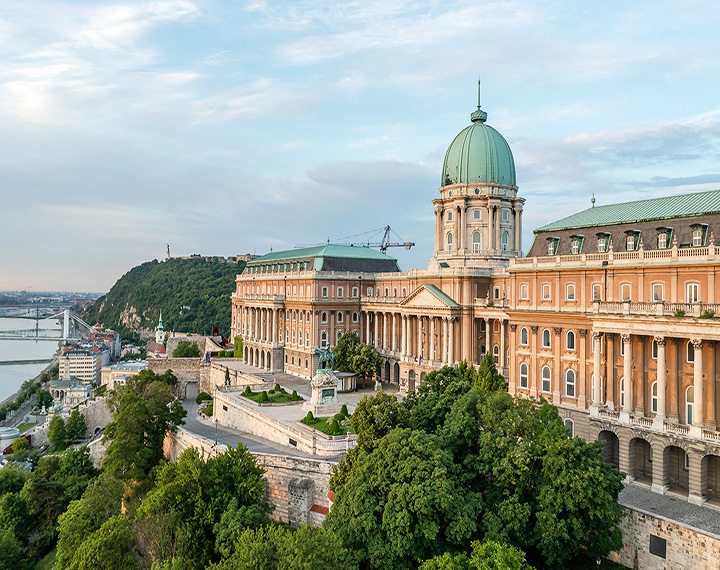
A breathtaking sanctuary of Hungarian soul and stone overlooking the Danube from the Royal Palace. The Hungarian National Gallery is the largest public collection documenting the evolution of fine arts in Hungary, grandly housed within several wings of the Buda Castle. Established in 1957, it brings together a vast treasury of works ranging from the medieval period to contemporary masters, providing a visual narrative of the nation’s identity, struggles, and artistic triumphs. The gallery’s location within the palace walls offers an imperial backdrop that elevates the viewing experience, connecting the power of the monarchy with the creative spirit of the people.
Features a world-renowned collection of Late Gothic winged altarpieces, displayed in the former throne room of the Royal Palace for a truly majestic atmosphere. Houses the expansive 19th-century collection of monumental historical paintings, including works by Mihály Munkácsy and Viktor Madarász that define Hungarian Romanticism. Contains the Dome Terrace, which provides one of the most celebrated panoramic views of Budapest, stretching from the Chain Bridge to the Parliament. Presents a significant selection of 20th-century avant-garde and contemporary works, showcasing the nation’s engagement with global modern art movements.
Culturally, the gallery serves as the premier guardian of the Hungarian aesthetic, capturing the unique light and landscape of the Carpathian Basin through the eyes of its greatest artists. The transition from the somber, religious intensity of the Middle Ages to the vibrant impressionism of the Nagybánya school reflects the shifting tides of European history as seen through a distinctly Hungarian lens. It remains a vital center for national pride and scholarly research, frequently hosting major temporary exhibitions that place Hungarian masterpieces in conversation with the works of international icons. The collection of 19th-century “Plain Air” painting captures the unique light and atmosphere of the Hungarian Great Plain and the shores of Lake Balaton. Maintains a dedicated section for the works of Károly Ferenczy and the Gödöllő Artists’ Colony, highlighting the Art Nouveau influence in Hungarian design.
The interior architecture reflects the layers of the palace’s history, from medieval foundations to the grand Neoclassical and Baroque reconstructions.
Regularly hosts “Textile and Tapestry” showcases and temporary graphic art displays from its extensive collection of over 100,000 items. For tourists, the gallery offers a sophisticated journey through the heart of the Castle District, making it a perfect cultural anchor for a day spent exploring the royal hilltop. The scale of the collection allows for hours of discovery, yet the layout remains inviting, with many galleries offering views of the palace courtyards or the river through their grand windows. Accessible via the historic Castle Hill Funicular or a scenic walk from the Fisherman’s Bastion it provides a peaceful and intellectually stimulating retreat from the busy tourist paths below.



 Own or work here?