

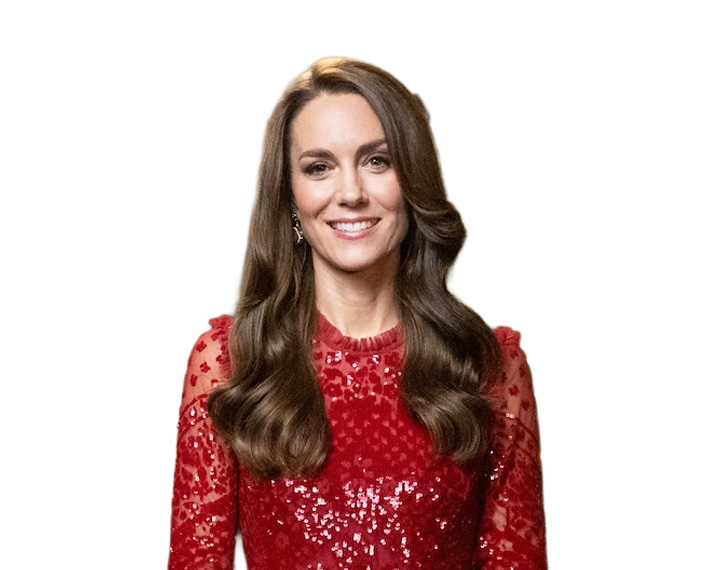
Her Royal Highness Catherine Elizabeth, Princess of Wales, was born on 9 January 1982 in Reading, Berkshire, the eldest child of Michael and Carole Middleton. Raised in the village of Bucklebury, she was educated at Marlborough College and graduated with an upper-second-class honours degree in the History of Art from the University of St Andrews in 2005. From an early age she demonstrated a strong sense of duty, completing the Gold Duke of Edinburgh’s Award and undertaking voluntary work in Chile before university. These formative experiences instilled in her the values of service, resilience, and empathy that have come to define her public life.
On 29 April 2011, following her engagement to His Royal Highness Prince William (announced in November 2010 with the sapphire-and-diamond ring once worn by Diana, Princess of Wales), Catherine married at Westminster Abbey in a ceremony watched by an estimated two billion people worldwide. Created Duchess of Cambridge on her wedding day, she assumed the titles of Duchess of Cornwall and Duchess of Rothesay in Scotland upon the accession of King Charles III in September 2022, and became Princess of Wales on the same occasion—the first to hold the title since Diana, Princess of Wales. As mother to Prince George, Princess Charlotte, and Prince Louis of Wales, she has consistently placed family at the heart of her royal mission while fulfilling an extensive programme of official engagements at home and abroad.
Throughout her tenure, The Princess of Wales has established herself as one of the most influential and admired figures in contemporary public life. Her pioneering work in early childhood development—most notably through the Royal Foundation Centre for Early Childhood, launched in 2021—has reshaped national and international understanding of the critical importance of the first five years of life. Her mental-health initiative Heads Together (2016–2020), co-founded with The Prince of Wales and The Duke and Duchess of Sussex, broke new ground in encouraging open conversation about emotional wellbeing. In 2024, having confronted a personal cancer diagnosis with characteristic courage and transparency, she used her experience to raise awareness of the disease and to champion improved support for those affected, earning global recognition including a place on Time magazine’s 100 Most Influential People lists in both Health and Philanthropy in 2025.
A patron or president of more than twenty charities, including the National Portrait Gallery, the Anna Freud Centre, and SportsAid, The Princess combines meticulous preparation with genuine warmth, whether meeting families in hospices, supporting addiction-recovery programmes, or highlighting the work of nurses and midwives. Her commitment to the natural world is reflected in patronage of the Natural History Museum and her advocacy for outdoor learning and environmental stewardship.
In an era too often marked by division and cynicism, The Princess of Wales has quietly but powerfully reaffirmed the enduring value of service, kindness, and moral leadership. By her example—rooted in humility, strengthened by adversity, and illuminated by an unshakeable sense of purpose—she continues to inspire millions and to demonstrate that true influence is measured not in titles, but in the lasting difference one life, lived with integrity and compassion, can make for many.
The Royal Foundation of The Prince and Princess of Wales stands as one of the most dynamic and forward-thinking philanthropic forces in the world today. Founded in 2009 by Prince William and Prince Harry, it became the principal vehicle through which the brothers—and later The Princess of Wales—channelled their determination to tackle some of society’s most stubborn challenges. From the very beginning, its guiding belief has been simple yet revolutionary: real and lasting change begins when people are willing to speak openly, listen deeply, and act together. What started as a modest royal charity has grown into a globally respected institution that refuses to accept the status quo, proving that compassion, when combined with rigorous evidence and bold ambition, can move mountains.
At its heart beats the conviction that the earliest years of life shape everything that follows. In 2021, The Princess of Wales launched the Royal Foundation Centre for Early Childhood, a landmark initiative that has transformed the national conversation about the first five years of life. By commissioning groundbreaking research, uniting scientists, practitioners, and policymakers, and placing lived experience at the table, the Centre has shown that investing in early childhood is not charity—it is the smartest, kindest investment a society can make. From boardrooms to playgrounds, its message echoes: every child deserves the best possible start, and every adult has a role in making that happen.
Mental health, long shrouded in silence, found its most powerful royal advocates through the Foundation’s Heads Together campaign. Launched in 2016, it united eight leading mental-health charities under one banner and, for the first time in British history, saw members of the Royal Family speak openly about their own struggles. Millions followed their example. Emergency-service workers, veterans, schoolchildren, and grandparents began conversations that once felt impossible. The campaign did not merely raise awareness; it dismantled stigma brick by brick and laid the foundations for initiatives like Shout, the UK’s first 24/7 text-support service, which has now supported over two million people in crisis.
The Foundation’s reach extends far beyond any single cause. It has sent coaches into inner-city communities to give young people safe places to belong, pioneered programmes that help serving military personnel and veterans transition to civilian life, and championed environmental projects that reconnect children with nature. In 2020 Prince William launched the Earthshot Prize—described as the most prestigious environmental prize in history—offering £1 million each year to five solutions that repair our planet. Within just a few years it has become a beacon of hope, proving that innovation and urgency can triumph over despair.
Fifteen years since its creation, The Royal Foundation continues to grow in influence and impact because it is driven by an unshakable optimism about human potential. It asks not what is wrong with the world, but what each of us can do—today—to make it better. In an age too often marked by division and discouragement, it stands as living proof that when vision, courage, and kindness walk hand in hand, even the most intractable problems begin to yield. Through its work, and through the quiet determination of its royal founders, it sends a message that rings clear across the globe: change is possible, hope is reasonable, and every single one of us can be part of building a future we are proud to hand to the next generation.



 Own or work here?