

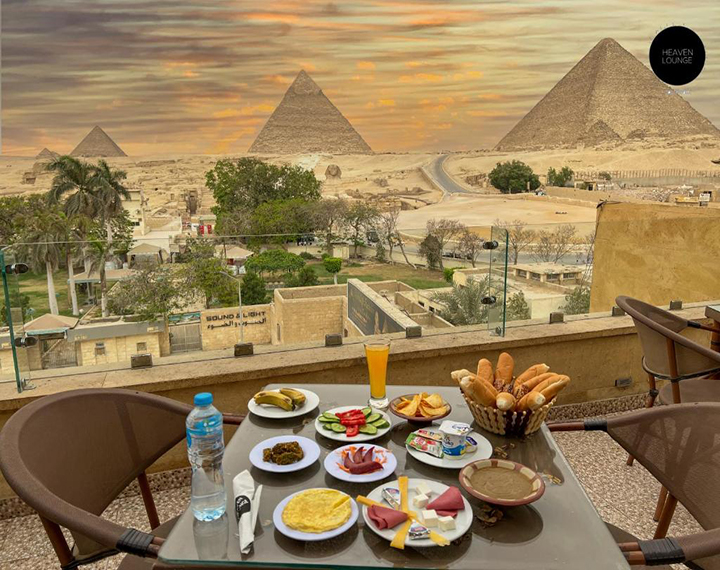
Rising from the golden sands of the Libyan Desert, the Giza Plateau is home to the most iconic architectural achievements in human history. Dominated by the Great Pyramid of Khufu, the Pyramid of Khafre, and the Pyramid of Menkaure, the site is a breathtaking display of mathematical precision and monumental ambition. These massive structures, built during the Fourth Dynasty of the Old Kingdom, were constructed using millions of limestone and granite blocks, some weighing several tons. The sheer scale of the engineering—aligned with celestial accuracy—remains a profound testament to the sophistication of ancient Egyptian civilization and its eternal pursuit of the divine.
The history of the plateau is a rich tapestry of royal legacy and archaeological discovery that spans over four millennia. Originally serving as a necropolis for the pharaohs, the site was chosen for its solid rock foundation and its proximity to the ancient capital of Memphis. The Great Pyramid, the oldest and largest, stood as the tallest man-made structure in the world for over 3,800 years. Today, visitors can explore not only the soaring peaks of the pyramids but also the intricate valley temples, queenly pyramids, and the tombs of the workers whose labor transformed this rocky ridge into a sacred landscape of immortality.
For the modern traveler, a visit to Giza is an immersive and sensory journey that begins at the vast new Visitor Center. The atmosphere is one of awe-stricken silence, broken only by the rhythmic footsteps of camels and the distant calls of the desert wind. Wandering through the plateau, one can stand between the paws of the Great Sphinx—the legendary guardian with the head of a king and the body of a lion—or climb to the Panoramic Viewpoint for a breathtaking perspective of all three pyramids aligned against the Cairo skyline. Whether you choose to venture into the narrow, humid galleries of the Great Pyramid or enjoy a sunset camel trek, the experience offers a quiet and powerful connection to the deep roots of human heritage.
The cultural landscape of Giza has been further elevated by the full opening of the **Grand Egyptian Museum (GEM)** in late 2025. Located just two kilometers from the pyramids, this state-of-the-art facility is the largest archaeological museum in the world dedicated to a single civilization. It houses over 100,000 artifacts, including the complete Tutankhamun collection and the legendary Khufu Solar Ship, which was meticulously moved from its plateau pit to its new home. The museum serves as an informative bridge between the ancient stones and modern technology, utilizing interactive displays and panoramic windows that keep the pyramids in constant view, providing a unique and educational perspective on the preservation of history.
An encounter with Giza is a deeply uplifting experience that highlights the permanence of human vision and the resilience of stone. Standing at the base of these granite giants, one is reminded that while empires rise and fall, the spirit of curiosity and the drive to create something enduring remain constant. The site is a favorite for those seeking to document the majesty of antiquity, offering a moment of true inspiration as the desert sun paints the ancient limestone in hues of rose and gold. It remains a timeless sanctuary of wonder, inviting every traveler to discover the profound mysteries and silent strength of the world’s most famous horizon.



 Own or work here?