
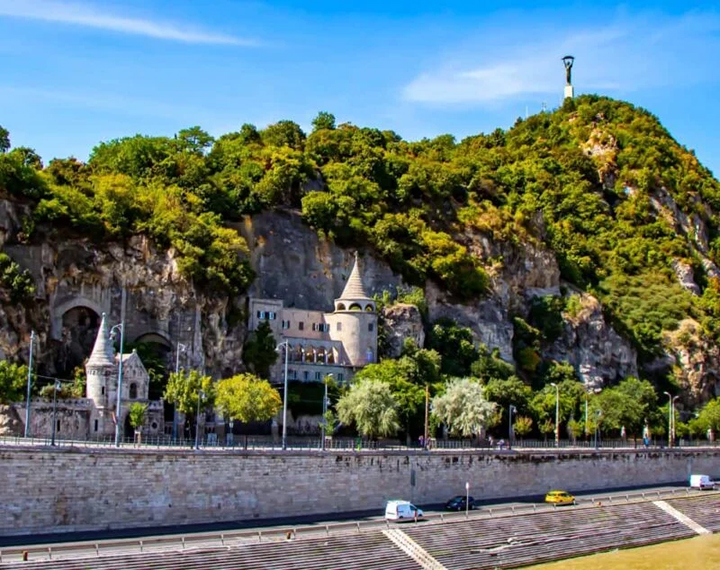
Serves as the highest natural point in central Budapest, offering a rugged and powerful perspective of the entire Danube bend. The climb to the top is a motivating journey through lush parkland, culminating at the Citadella and the Liberty Statue. Provides a panoramic 360-degree view that encompasses all of the city’s major bridges simultaneously. Features several hidden “lookout pockets” along the winding paths that offer intimate views of the Elisabeth Bridge. Home to the Cave Church and the Garden of Philosophers, adding a spiritual and cultural layer to the visit.
Rising majestically above the Danube, Gellért Hill is one of Budapest’s most iconic landmarks, offering a dramatic silhouette against the city’s skyline. Named after Saint Gerard, who was famously martyred on its slopes, the hill is a massive dolomite outcrop that serves as a vital geological and historical anchor for the capital. It is perhaps best known for its commanding height of 235 meters, providing a natural vantage point that has been utilized for military and strategic purposes for centuries. Today, it is recognized as a UNESCO World Heritage site, drawing locals and travelers alike to its winding forest paths and rocky cliffs.
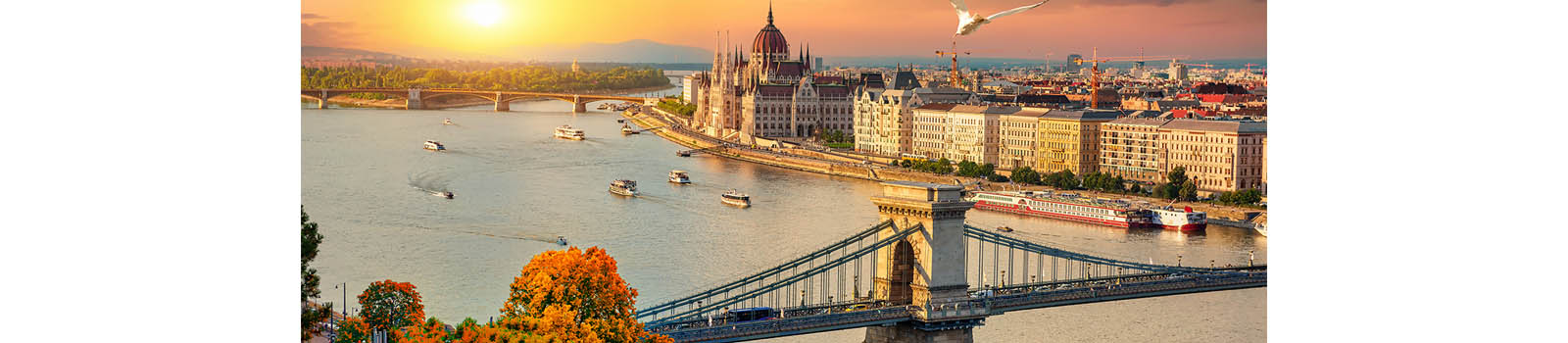
At the summit of the hill sits the Citadella, a formidable fortress built by the Habsburgs following the 1848–49 Hungarian War of Independence to exert control over the city. Standing proudly in front of the fortress is the Liberty Statue, a towering bronze figure holding a palm leaf, which has become a symbol of peace and resilience for the Hungarian people. The surrounding plateau offers what many consider to be the finest panoramic view in Europe, capturing the intricate curves of the Danube, the architectural grandeur of the Parliament building, and the contrasting landscapes of flat Pest and hilly Buda in a single, breathtaking sweep.
Beyond its historical monuments, Gellért Hill is a place of natural wonders and hidden gems, including the unique Cave Church tucked into its southern side and the ornate Gellért Thermal Baths located at its base. The hill is fed by deep thermal springs that have made the area a center for spa culture since the Ottoman era. Whether you are exploring the philosophical “Garden of Philosophers” or simply enjoying the sunset from a stone bench, the hill offers a serene, leafy retreat that perfectly encapsulates the dual nature of Budapest—a city that is as deeply rooted in its ancient terrain as it is in its vibrant, modern identity.



 Own or work here?