

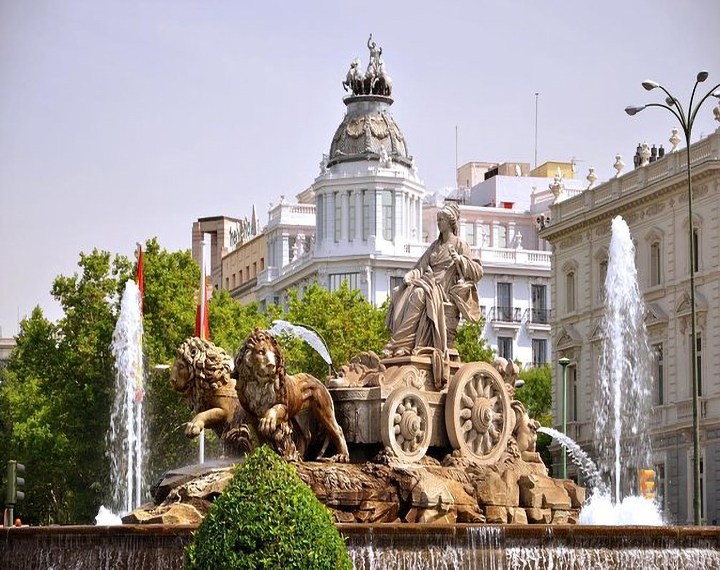
The Fuente de Cibeles in Mexico City is an exact, faithful replica of the famous 18th-century fountain located in Madrid, Spain. Unveiled in 1980 as a symbol of friendship and cultural brotherhood between the Spanish and Mexican communities, this striking bronze monument depicts the Roman goddess Cybele, representing earth and fertility, riding a chariot pulled by two majestic lions. The sculpture is installed at the center of a bustling traffic circle in the vibrant Roma Norte neighborhood, serving as both a prominent urban landmark and a historical bridge connecting the old world with the new.
Architecturally, the fountain is an impressive feat of design and engineering, measuring approximately 12.5 meters long, 4.7 meters wide, and 5.5 meters tall. It is situated within a large, circular plaza that has been transformed over the decades into a lively pedestrian hub. The cascading water features, combined with the detailed artistry of the bronze figures, create a serene oasis amidst the surrounding urban energy. In recent years, comprehensive restoration projects have modernized its infrastructure, introducing energy-efficient illumination and water recycling systems while carefully preserving the intricate textures of the original sculpture.
Today, the Fuente de Cibeles is much more than a historical monument; it functions as the beating heart of the Roma district. The surrounding plaza is a favorite gathering spot for locals and tourists alike, ringed by trendy cafes, bookstores, and tree-lined streets. On weekends, the area often transforms into a vibrant open-air market, and it frequently serves as a celebratory meeting point for football fans and cultural festivals. It stands as a beautiful testament to shared heritage, blending European classical design seamlessly into the eclectic, modern fabric of Mexico City.



 Own or work here?