

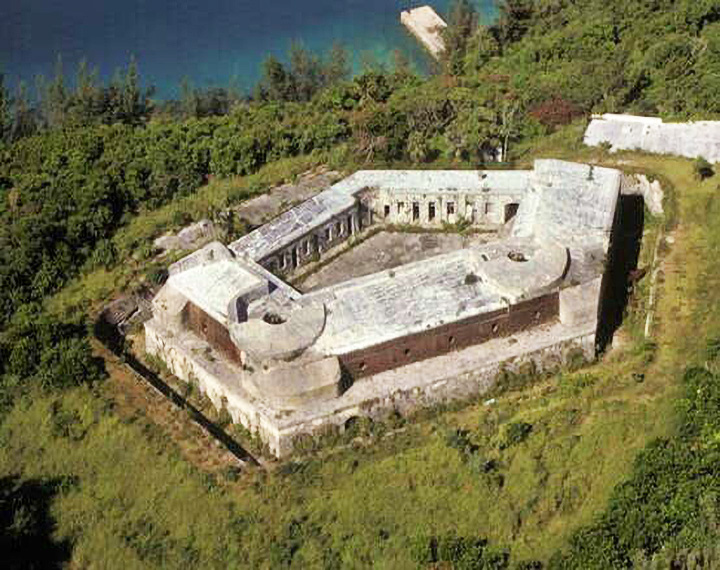
Bermuda’s Imperial Sentinel Of The Eastern Passage. Discover the formidable limestone ruins of a coastal giant guarding the islands entry. The monumental ruins of Fort Cunningham stand as one of the most significant and imposing examples of Victorian military engineering in the Atlantic. Perched strategically on Paget Island, this massive fortification was designed to dominate the primary shipping channel leading into the St. George’s Harbour. Its architectural evolution is a fascinating chronicle of the arms race between artillery and armor, featuring unique iron-fronted casemates that were once the height of nineteenth-century defensive technology, designed to withstand the most powerful naval guns of the era.
As a primary guardian of the Narrows Channel, the fort’s sheer scale reflects the immense strategic value the British Empire placed on the Bermuda dockyards. The structure is built into the rugged limestone hillside, with deep dry moats and sprawling underground magazines that once buzzed with the activity of a full garrison. Today, the weathered stone ramparts offer a hauntingly beautiful perspective on the islands maritime past, where the hand-carved blocks and rusted iron shields remain as silent witnesses to the ingenuity and labor of the Royal Engineers who shaped this rocky outcrop into a fortress.
The cultural legacy of the site is deeply connected to the security of the Town of St. George, serving as the first line of defense against any potential seafaring invaders. While the fort has transitioned from an active military post to a protected historic site, it remains an essential component of the UNESCO World Heritage designation. Its isolated position on Paget Island has preserved much of its original character, offering a raw and authentic experience for those who venture across the water to explore its labyrinthine tunnels and massive gun emplacements that once held some of the largest rifled muzzle loaders in the world.
Exploring the site provides an unparalleled vantage point of the surrounding turquoise waters and the treacherous reefs that have claimed so many vessels throughout history. The natural world has begun to reclaim the stone walls, with endemic plants and nesting seabirds finding sanctuary within the crevices of the ancient masonry. This intersection of military might and natural resilience creates a peaceful atmosphere for reflection, allowing visitors to contemplate the immense efforts taken to secure this remote Atlantic station during the peak of the British naval empire.
As the sun illuminates the rugged eastern face of the fortress, the enduring strength of the limestone foundations ensures that the story of this naval sentinel will continue to inspire. It is a site that encourages a deep appreciation for the maritime heritage and the architectural brilliance that defined the defense of Bermuda. The majestic presence of the ruins remains a luminous testament to the bravery and strategic vision of those who stood watch over the islands shores, inviting all who visit to connect with a legacy of maritime strength and historical resilience.



 Own or work here?