
The European Commission is the executive body of the European Union. It is composed of 27 members of the Commission (informally known as “Commissioners”) corresponding to the number of member states, unless the European Council, by unanimous consent, decides to alter this number.The current number of Commissioners is 27, including the president.It oversees an administrative body of about 32,000 European Civil Service employees. The commission is divided into departments known as Directorates-General (DGs), comparable to national ministries, each headed by a director-general (comparable to a permanent secretary) who is responsible to a Commissioner.
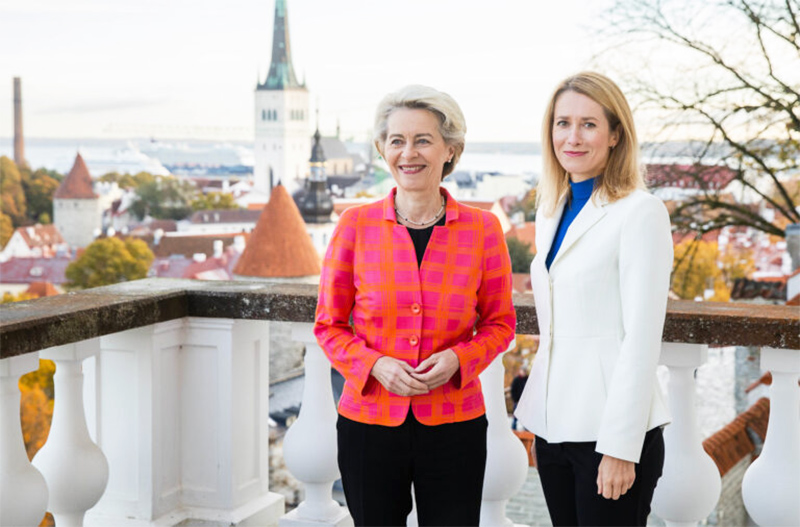
Currently, there is one Commissioner per member state, but members are bound by their oath of office to represent the interest of the EU as a whole rather than their home state. The Commission president (currently Ursula von der Leyen) is nominated by the European Council the 27 heads of government) and must win the confidence of the European Parliament before assuming office. The Council of the European Union then nominates the other members of the Commission in agreement with the nominated president, and the entire cabinet is then subjected to a final vote of confidence in the European Parliament. A motion of no confidence passed by a two-thirds majority in the Parliament can force the resignation of the Commission. The sitting cabinet is the second von der Leyen Commission, which took office in December 2024, following the 2024 European Parliament elections.
The European Commission derives from one of the five key institutions created in the supranational European Community system, following the proposal of Robert Schuman, French Foreign Minister, on 9 May 1950. Originating in 1951 as the High Authority in the European Coal and Steel Community, the commission has undergone numerous reorganizations and seen its powers increase over time to respond to the increasing need for a strong executive to manage European integration
The first Commission originated in 1951 as the nine-member “High Authority” under President Jean Monnet (see Monnet Authority). The High Authority was the supranational administrative executive of the new European Coal and Steel Community (ECSC). It took office first on 10 August 1952 in Luxembourg City. In 1958, the Treaties of Rome had established two new communities alongside the ECSC: the European Economic Community (EEC) and the European Atomic Energy Community (Euratom). However, their executives were called “Commissions” rather than “High Authorities”.The reason for the change in name was the new relationship between the executives and the Council. Some states, such as France, expressed reservations over the power of the High Authority and wished to limit it by giving more power to the Council rather than the new executives
Louis Armand led the first Commission of Euratom. Walter Hallstein led the first Commission of the EEC, holding the first formal meeting on 16 January 1958 at the Château of Val-Duchesse. It achieved agreement on a contentious cereal price accord, as well as making a positive impression upon third countries when it made its international debut at the Kennedy Round of General Agreement on Tariffs and Trade (GATT) negotiations. Hallstein notably began the consolidation of European law and started to have a notable impact on national legislation. Little heed was taken of his administration at first but, with help from the European Court of Justice, his Commission stamped its authority solidly enough to allow future Commissions to be taken more seriously. In 1965, however, accumulating differences between the French government of Charles de Gaulle and the other member states on various subjects (British entry, direct elections to Parliament, the Fouchet Plan and the budget) triggered the “empty chair” crisis, ostensibly over proposals for the Common Agricultural Policy. Although the institutional crisis was solved the following year, it cost Étienne Hirsch his presidency of Euratom and later Walter Hallstein the EEC presidency, despite his otherwise being viewed as the most ‘dynamic’ leader until Jacques Delors.



 Own or work here?