

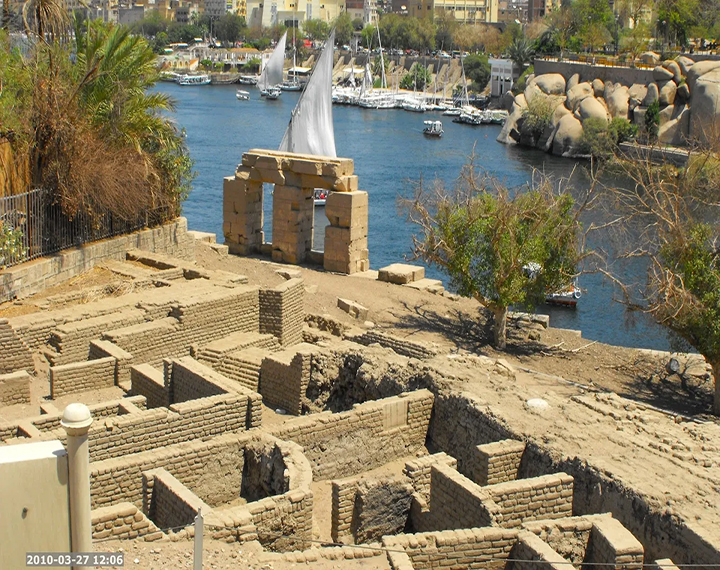
The Elephantine Island Pyramid is a fascinating and enigmatic structure that represents one of the seven small provincial step pyramids found throughout Egypt. Unlike the massive burial tombs of Giza, this pyramid is smaller in scale and was likely built during the Third Dynasty, possibly by King Huni or Snefru. Its presence on the southern tip of the island highlights the strategic and religious importance of Aswan as a gateway to the south since the dawn of Pharaonic history.
As you wander through the archaeological site, you will notice that the pyramid was constructed using local granite and sandstone, allowing it to blend naturally with the rocky terrain of the island. Although it has weathered over the millennia, the remaining three steps provide a clear look at the architectural evolution that eventually led to the Great Pyramids. It stands as a silent witness to the early development of stone construction and royal power in ancient Egyptian society.
The site is surrounded by the vibrant ruins of the ancient town of Abu, offering a unique opportunity to see how sacred monuments were integrated into the daily life of a bustling river community. Walking around the base of the pyramid, you can appreciate the craftsmanship of the early builders who shaped these blocks without the complex tools of later eras. The elevated position on the island provides a refreshing breeze and a sense of isolation from the modern city across the water.
Visitors often find the pyramid to be a quiet place for reflection, away from the more crowded tourist hubs, where the history of the Nile seems almost tangible. The area is rich with other discoveries, including ancient temples and nilometers, making the pyramid a central piece of a much larger historical puzzle. Its simple, sturdy form evokes a deep sense of wonder about the lost meanings and purposes behind these provincial monuments.
Exploring this site is a highlight for those who enjoy uncovering the lesser-known gems of Egyptian archaeology. The journey to the island by traditional sailboat adds a layer of timeless charm to the visit, preparing you for a step back into the very beginnings of recorded history. It remains a powerful symbol of the enduring legacy of the Old Kingdom, standing proudly amidst the lush palms and flowing waters of the Nile.



 Own or work here?