

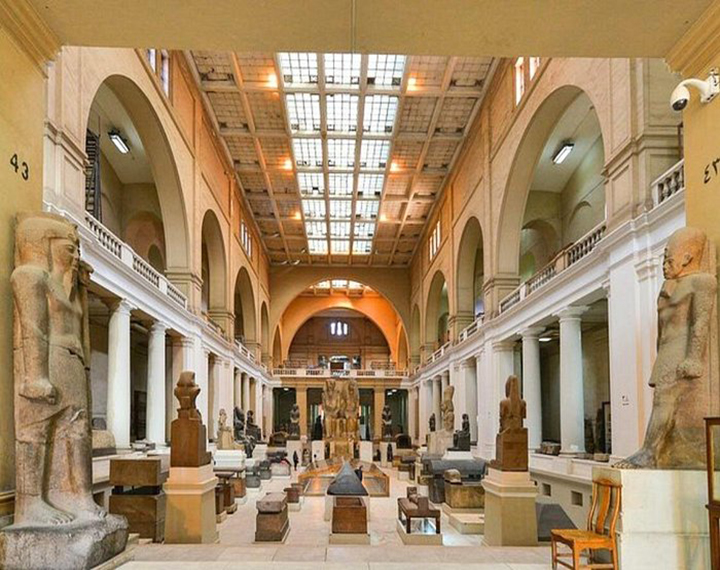
Residing in stately neoclassical splendour on the northern edge of Tahrir Square, the Egyptian Museum is one of the most treasure-filled buildings on the planet. Inaugurated in 1902, this pale rose-coloured palace of antiquity houses a collection of approximately 120,000 ancient artefacts — more than any other museum in the world dedicated to a single ancient civilization.
The museum’s greatest treasures are almost too spectacular to comprehend. The solid gold death mask of Tutankhamun, weighing 12 kilograms and radiating an otherworldly beauty, draws visitors from every corner of the globe. Nearby, the young pharaoh’s gilded throne, his alabaster canopic jars, and his gilded ceremonial chariot form one of archaeology’s most extraordinary collections. Statues of Khufu, Khafre, and Menkaure stand in silent dignity, stone faces still carrying the authority of the ancient world.
Beyond the famous rooms, the museum rewards those who wander. Mummified animals, ancient jewellery, papyrus scrolls, wooden funerary boats, and painted sarcophagi from every dynasty fill hall after hall, each artefact a fragment of a civilization that endured for three thousand years. Few experiences in travel compare to standing before a 4,000-year-old statue and feeling the full span of human time compress into a single extraordinary moment.
The building itself, with its ornamental façade, Italianate garden, and the haunting ambiance of its dimly lit galleries, adds to the sense of stepping through time. A visit here is best spread across at least half a day — ideally more — to give the collection the reverence it so richly deserves.



 Own or work here?