

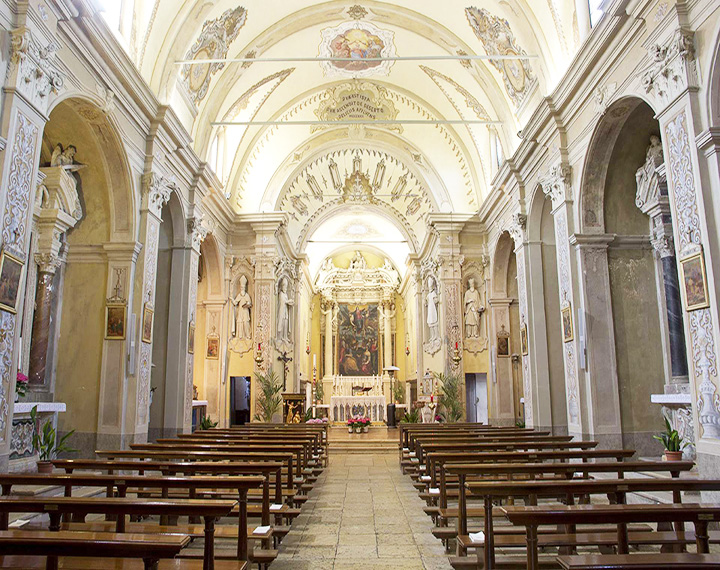
The Church of Santa Maria presso San Satiro is a breathtaking Renaissance masterpiece tucked away in the bustling heart of Milan’s shopping district. While the exterior may appear modest to the passing traveler, the interior reveals a stunning display of architectural ingenuity that has captivated visitors for centuries. It is most famous for its incredible “trompe-l’oeil” perspective, a visual illusion created by the legendary architect Donato Bramante to compensate for the lack of space behind the altar.
Culturally, this church stands as a testament to the Italian Renaissance’s obsession with mathematical precision and the harmony of space. In a city that serves as a global hub for design and fashion, San Satiro reminds us that Milan’s reputation for visual trickery and aesthetic brilliance dates back over five hundred years. It remains an active place of worship where the sacred atmosphere is heightened by the sheer brilliance of its artistic execution, drawing in both the devout and the design-conscious from around the world.
The historical roots of the site are deep, originally centering on a small 9th-century shrine dedicated to Saint Satyrus, the brother of Saint Ambrose. In the late 15th century, the expansion was commissioned, but a neighboring road prevented the construction of a traditional deep apse. Bramante’s solution—painting a perspective that makes a space of only 97 centimeters appear to be several meters deep—was a revolutionary moment in architectural history. This work preceded his contributions to St. Peter’s Basilica in Rome and solidified his status as a visionary.
For tourists, visiting San Satiro is an essential, quick-stop experience that offers a profound “wow” moment just steps away from the Duomo. To truly appreciate the magic, one must walk from the entrance toward the altar; as you move, the depth of the choir seems to compress, revealing the flat wall that was hidden by Bramante’s artistic genius. It is a quiet sanctuary of peace amidst the city’s noise, offering a unique opportunity to see world-class art for free in an intimate, historical setting.



 Own or work here?