
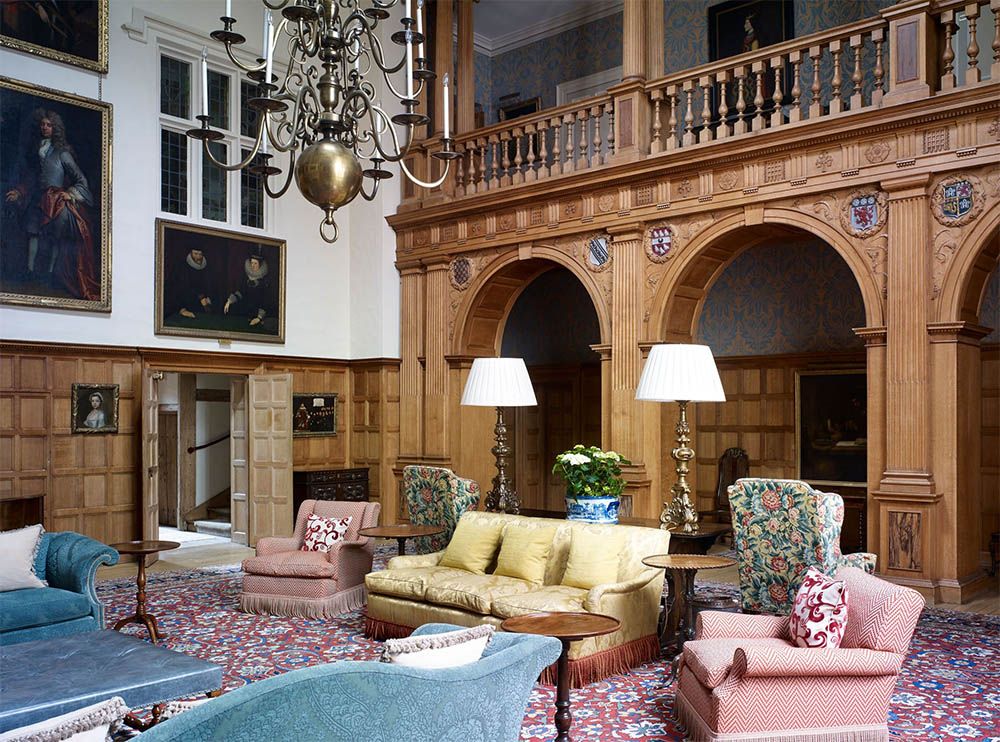
Chequers serves as the official country residence of the Prime Minister of the United Kingdom, offering both a private retreat and a setting for official functions. Nestled in the Buckinghamshire countryside, it provides a secluded environment where the Prime Minister can host foreign dignitaries, conduct high-level discussions, and engage in policy deliberations away from the pressures of central London. During the 18th and 19th Centuries, it was common for Prime Ministers to have large country houses. Many of the aristocratic Prime Ministers like the Duke of Newcastle, Lord Rockingham, and Lord Rosebery had a number of homes outside London.
A country house was not only a convenient escape from the city, but a symbol of status, good taste, and custodianship of the countryside. Benjamin Disraeli bought Hughenden in Buckinghamshire precisely because, as a prominent member of a party representing the values of traditional England, as well as a landowning class, a country house gave him considerable symbolic standing. However, during the twentieth century, with the onset of mass democracy and the expansion of the franchise, it became likely that Britain’s political leadership would be drawn from a wider social background. As such, they would be less likely to possess a place in the countryside where they could escape from the hectic London scene. This was a problem foreseen by Sir Arthur Lee of Fareham, then owner of Chequers estate, who bequeathed the house to the nation in 1917. The Trust Deed stated that. Beyond its political function, Chequers symbolizes continuity and tradition, reflecting centuries of British history, while supporting the Prime Minister in balancing the demands of public office with moments of privacy and reflection in a stately, historic setting.
Chequers is a Tudor/Elizabethan manor house built around 1556 by William Hawtrey, standing near Ellesborough in Buckinghamshire, about forty miles northwest of London. Over the centuries it passed through several families (the Hawtreys, the Wooleys, the Crokes, the Thurbanes, and the Russell/Astley line), and underwent architectural changes, including Gothic revival alterations and later restoration to its older red-brick appearance. In 1917, Sir Arthur Hamilton Lee (Viscount Lee of Fareham) and his wife Ruth gifted Chequers to the nation under the Chequers Estate Act so that the serving Prime Minister would have a countryside retreat. David Lloyd George was the first Prime Minister to officially use it in 1921. It’s not just a place of rest; it has become an established part of the political life of the UK — hosting meetings, offering a quieter setting away from Westminster and Downing Street, and playing a role in personal respite for Prime Ministers.



 Own or work here?