
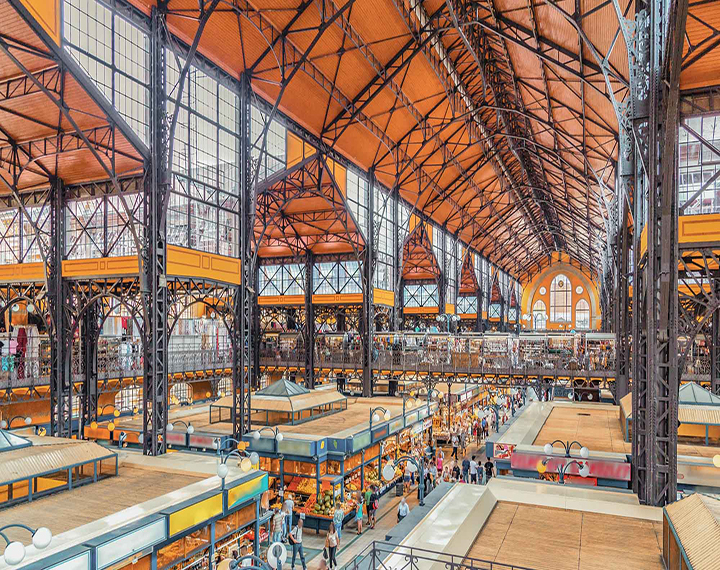
The largest and oldest indoor market in Budapest, standing as a spectacular example of nineteenth-century engineering and design. Designed by Samu Pecz and opened in 1897, the building is famous for its massive iron structure and a roof adorned with colorful Zsolnay ceramic tiles that shimmer under the Hungarian sun. This bustling landmark serves as the stomach of the city, where the architectural grandeur of the Neo-Gothic facade meets the lively, authentic energy of a traditional European marketplace.
The Central Market Hall in Budapest, also known as Nagyvásárcsarnok, stands as a magnificent testament to 19th-century Neo-Gothic architecture and remains the largest indoor market in Hungary. Located at the end of the famous Váci utca shopping street near the Liberty Bridge, its exterior is immediately recognizable by its striking roof, adorned with colorful Zsolnay ceramic tiles that shimmer in the sunlight. Built in 1897, the structure was designed to centralize food quality control and supply for the growing city, featuring a massive iron skeleton that was considered an engineering marvel at the time of its completion.
Stepping inside, visitors are greeted by a sprawling three-story expanse filled with the sights, sounds, and aromas of authentic Hungarian life. The ground floor is a bustling maze of stalls where locals shop for fresh produce, aromatic spices, and high-quality meats. Huge strings of vibrant red paprika peppers and garlands of garlic hang from the rafters, while the scent of smoked mangalica sausages fills the air. It is here that the culinary heart of Budapest beats strongest, offering everything from world-class Tokaji wines to traditional spirits like Unicum and Pálinka, all housed under a soaring, cathedral-like ceiling.
The upper floor and basement levels provide a deeper dive into Hungarian culture and history through a mix of crafts and specialized goods. On the mezzanine, narrow walkways are lined with vendors selling intricate folk embroidery, hand-painted eggs, and lace, alongside small eateries serving hearty staples like lángos and goulash. Meanwhile, the basement often houses a fish market and various specialty shops that highlight the diversity of the region’s agriculture. Whether you are a gourmand looking for the perfect spice or a traveler seeking a piece of history, the Central Market Hall serves as a vibrant, living museum of Budapest’s social and gastronomic heritage.



 Own or work here?