


Bernd Neuendorf was elected president of the German Football Association (DFB) in March 2022, having previously served as president of the Mittelrhein FA. After studying modern history and politics at university, he worked as a journalist with a focus on political affairs. In 2003 he became spokesman of the Social Democratic Party (SPD), first in Berlin and then in his home state of North Rhine-Westphalia. It was here where he took the position of managing director of the SPD in 2007. Five years later he was appointed state secretary in the government of North Rhine Westphalia responsible for family, youth, children, culture and sport. He then orientated his professional life towards his life-long love of football.
The German Football Association, known as the Deutscher Fußball-Bund (DFB), is the governing body for football in Germany. Established in 1900, the DFB is responsible for overseeing all aspects of the sport within the country, from grassroots and amateur levels to the professional leagues and the national teams.
Domestic Competitions:
Grassroots Football:
International Representation:
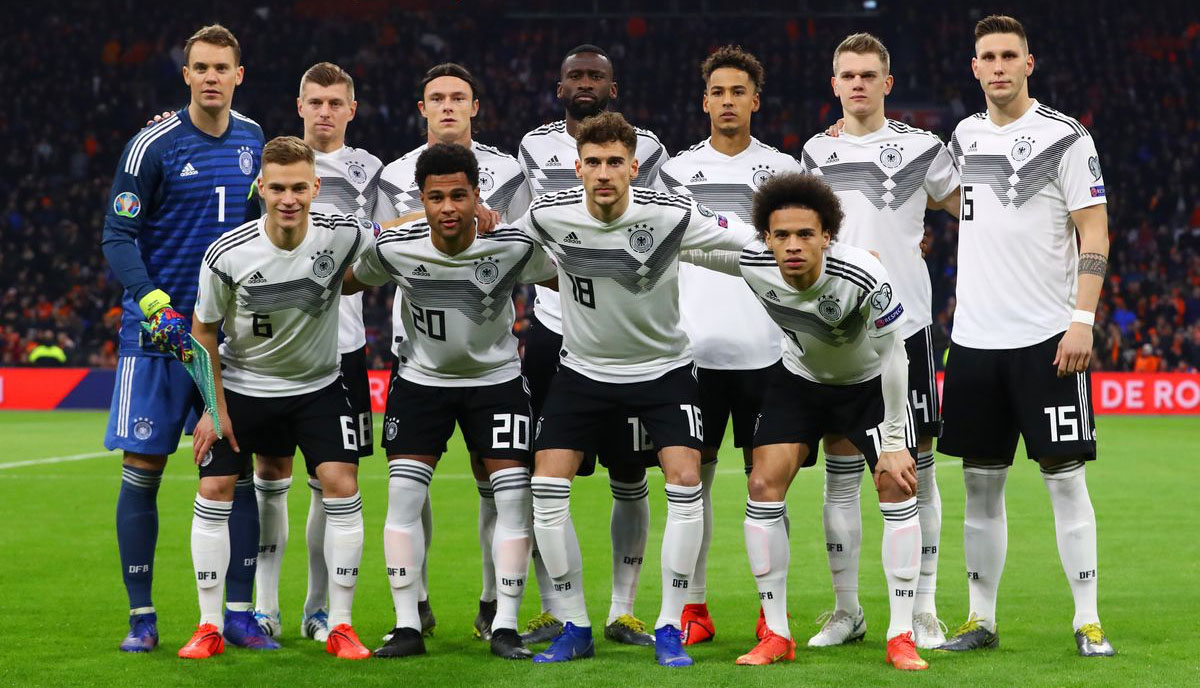
The German men’s national football team, known as Die Mannschaft, has a storied history and a remarkable record of achievements in international football. Founded in 1900, the German Football Association (DFB) oversees the national team, which has become one of the most successful in the history of the sport. Germany has won the FIFA World Cup four times, securing their first title in 1954 in a stunning victory known as the “Miracle of Bern.” This was followed by World Cup wins in 1974, 1990, and most recently in 2014, when they triumphed in Brazil with a memorable 1-0 victory against Argentina in the final, thanks to a late goal by Mario Götze.
Apart from their World Cup successes, the German team has also been highly successful in the UEFA European Championship, winning the tournament three times (1972, 1980, and 1996) and finishing as runners-up on three occasions. Germany’s consistent performance in major tournaments is attributed to their disciplined playing style, tactical flexibility, and the development of world-class players who have left an indelible mark on the sport. Notable figures include Franz Beckenbauer, who led the team to victory as both a player and a coach, and modern legends like Miroslav Klose, the all-time top scorer in World Cup history. The team’s resilience and ability to perform under pressure have cemented their status as a powerhouse in international football.



 Own or work here?