

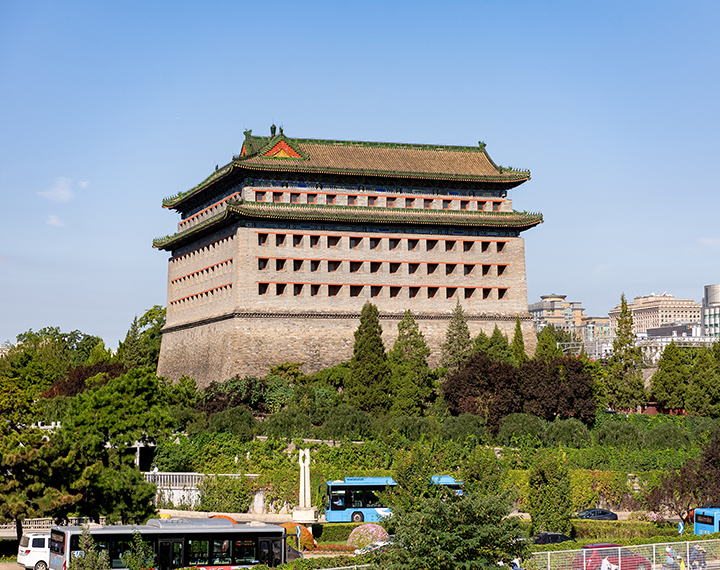
Beijing Ming City Wall Ruins Park is a remarkable window into the city’s ancient defensive architecture and urban history. The park preserves remnants of the massive city walls that once encircled Beijing during the Ming dynasty, serving both as fortification and as a symbol of imperial authority. Though much of the original wall has been lost to urban development, the remaining sections, particularly around the Zhengyangmen area, offer visitors a tangible connection to the city’s past. Walking along the restored ramparts and stone pathways, one can imagine the bustling activity of soldiers, messengers, and citizens that once thrived along these formidable barriers, highlighting the strategic and political significance of Beijing as the imperial capital.
Historically, the Ming City Wall exemplifies the advanced engineering and urban planning of the era. Constructed from large bricks and compacted earth, the wall stretched for nearly 25 kilometers and was punctuated by imposing gates, watchtowers, and bastions designed to protect against invaders. The surviving sections reflect not only military ingenuity but also the Ming emphasis on symbolism, with orientations, proportions, and decorative elements designed to convey the emperor’s power and maintain harmony with cosmological principles. The park thus serves as both a historical artifact and a cultural narrative, telling the story of Beijing’s evolution from a fortified imperial city to a modern metropolis.
For tourists, the park offers a serene yet immersive experience, combining history with leisure. Its green spaces, walking trails, and scenic views make it a popular destination for both locals and visitors seeking respite from the urban pace. Photographers and history enthusiasts alike can explore the restored wall, ancient gates, and interpretive displays that illuminate the wall’s significance. As one strolls through the park, the juxtaposition of ancient stone structures against the modern cityscape provides a compelling visual reminder of Beijing’s layered history, allowing visitors to appreciate the resilience of the city and the enduring presence of its Ming dynasty heritage.



 Own or work here?