

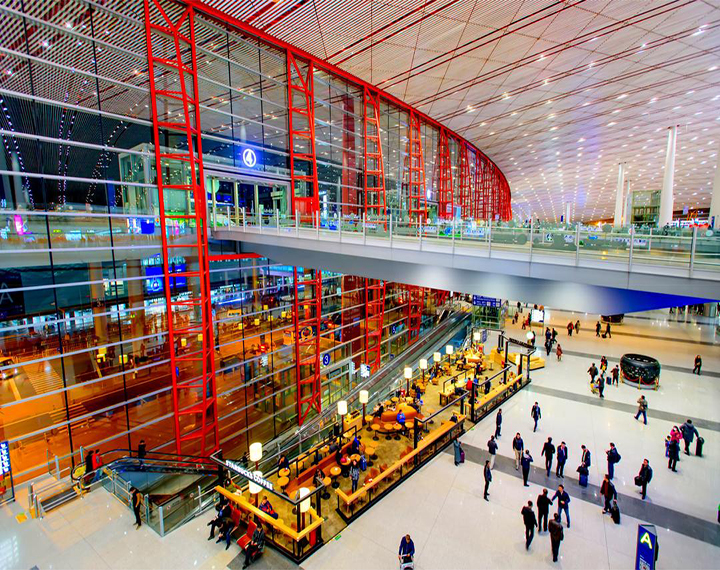
Stepping into the Arrivals area of Beijing Capital International Airport (PEK), particularly the colossal Terminal 3 (T3), is to immediately cross a threshold into a potent symbol of modern China’s global ambition, rooted in ancient cultural majesty. Historically, the construction of T3 was a monumental undertaking, completed as the spectacular gateway for the 2008 Beijing Olympics, marking a pivotal moment in the nation’s contemporary architectural and infrastructural narrative. Designed by the renowned architect Norman Foster, the structure itself is an architectural masterpiece, a sweeping, aerodynamic form often likened to a soaring dragon—a profoundly auspicious and powerful symbol in Chinese culture. This cultural echo is immediately visible in the design: the vast, unified roof canopy is supported by striking imperial red columns, and the ceiling features a brilliant color gradient, shifting from gold and yellow to deep red, consciously mirroring the traditional color palette and axial planning of the Forbidden City and imperial Chinese temples, offering an immediate and breathtaking immersion into the essence of the capital.
The touristic arrival experience is defined by this grand sense of scale and symbolic design, aiming to be both uplifting and highly efficient for international travellers. As you deplane and proceed through the vast hall, the cultural elements continue, not just through the architecture but in deliberate artistic touches like traditional carvings, decorative water features, and sculptures—including those that sometimes feature dragons or other symbolic motifs, blending classical Chinese artistry with contemporary materials like glass and steel. While the architectural splendor is consistently lauded, the functional tourist experience in the arrivals process itself, encompassing immigration and customs, is often reviewed as a contrast to the aesthetic triumph. While the sheer size means walking distances are sometimes mitigated by the Automatic People Mover train, the process can be slow, reflecting the rigorous security and administrative protocols of a major international hub, where efficiency can sometimes be overshadowed by thoroughness.
Despite the occasional operational challenges mentioned by travellers, such as language barriers with some staff and the sheer volume of the space, the Arrivals hall acts as a compelling first taste of Beijing, offering an unmistakable sense of place. It is a modern, high-tech hub of international transit, yet one where the spirit of Chinese culture is unmistakably etched into the very foundations of its design. The arrival is not just a logistical process, but an immediate and powerful introduction to a country that seamlessly marries its deep historical and cultural reverence for powerful symbols like the dragon with its cutting-edge position as a global leader in the 21st century, setting a dramatic and memorable stage for the adventures that await in the ancient capital. Get ready to step into the heart of China! To ensure your arrival is as smooth as a Great Wall sunrise, here is the essential information you need upon landing at Terminal 3 (T3) of Beijing Capital International Airport (PEK).



 Own or work here?