

Being 28 kilometers from Capital International Airport, Beijing Railway Station is located in No.13 Hutongjia, Maojiawan, Dongcheng District, southeast of the city center inside the Second Ring Road. To get to the station from the airport, one can take the Airport Shuttle Bus (No.3) as the first choice. The bus leaves from Terminal 3 Station of Capital International Airport and will run for about 1 hour and 30 minutes on the way. The scheduled running time of Airport Express No.3 is from 7:00 am to 24:00 pm, and the ticket price is 30 RMB per person. As a time-saving choice, tourists can choose to take Metro Line 2 to the train station. By this way, it only takes nearly 1 hour for the transfer. But you need to first take the shuttle express as well and then transfer to Metro Line 2 (Inner Loop) at Dongzhimen station. The total cost for the combined transportation is 28 RMB per person.
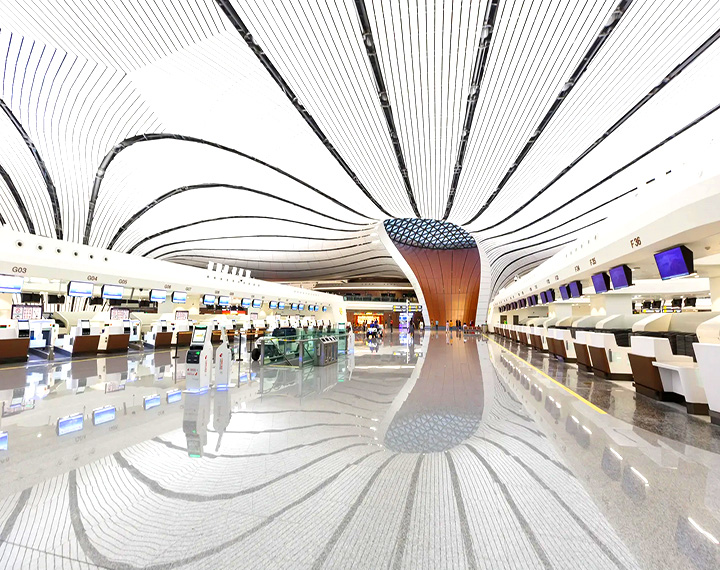
Beijing Capital International Airport is not only a major gateway to China but also a symbol of the city’s modernity, scale, and global connectivity. As one of the busiest airports in the world, it serves as a hub linking Beijing with destinations across Asia, Europe, the Americas, and beyond. The airport’s architecture combines functional efficiency with contemporary design, featuring expansive terminals, streamlined passenger flows, and thoughtfully designed public spaces that reflect the city’s emphasis on order, convenience, and comfort. For travelers, the airport is often the first introduction to Beijing, providing a glimpse into China’s rapid development and its capacity to accommodate international commerce, tourism, and cultural exchange.
Historically, Beijing Capital International Airport has played a pivotal role in the city’s emergence as a global metropolis. Since its opening in the early 1980s and through subsequent expansions, the airport has mirrored the growth of China’s aviation industry and economic development. It has witnessed the increasing influx of international visitors, diplomatic delegations, and business travelers, serving as both a literal and symbolic gateway to the nation. The airport’s design and operations also reflect traditional Chinese values of organization and hospitality, blending modern engineering with cultural attentiveness to passenger experience.
For tourists, the airport is more than a transit point; it offers a glimpse into Beijing’s dynamic urban identity. Beyond its terminals, amenities include art exhibitions, cultural displays, and retail experiences that showcase Chinese craftsmanship and modern innovation. Travelers can observe the efficiency of operations, the scale of infrastructure, and the integration of cultural elements that make the airport uniquely Beijing. As a starting point for exploration, Beijing Capital International Airport provides both practical convenience and a cultural introduction, preparing visitors for the historical, culinary, and artistic experiences that await in the city itself.



 Own or work here?