

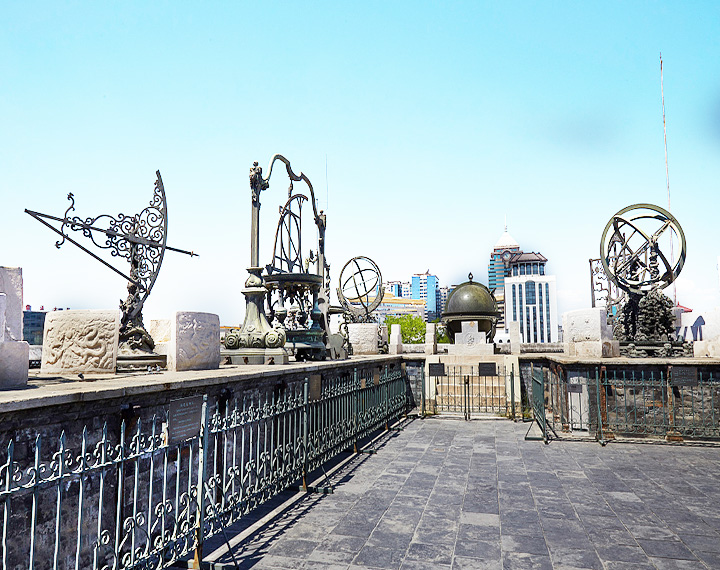
The Beijing Ancient Observatory is one of the most fascinating historical landmarks in the city, standing as a testament to China’s long and profound engagement with the study of the heavens. Established in 1442 during the Ming dynasty, it is among the oldest observatories in the world and served as the imperial centre for astronomical research and celestial observation for nearly five centuries. Located near Jianguomen, the observatory sits on an elevated stone platform, its ancient bronze instruments gleaming with a sense of both science and artistry. These meticulously crafted instruments, including armillary spheres, celestial globes, and quadrants, showcase the sophistication of Chinese astronomical knowledge and the integration of art, mathematics, and philosophy that defined imperial science.
Historically, the observatory reflects China’s deep-rooted belief in the harmony between heaven and earth, a concept central to governance and cosmology in imperial times. Astronomers here were charged with tracking celestial movements to guide the agricultural calendar, predict eclipses, and interpret omens — tasks that carried political and spiritual weight. In the Qing dynasty, the observatory gained an additional layer of cultural depth when Jesuit missionaries, such as Ferdinand Verbiest, contributed Western scientific knowledge and introduced advanced European instruments. This blending of Chinese and Western astronomy made the site a remarkable crossroads of global scientific exchange long before the modern era.
For tourists, the Beijing Ancient Observatory offers a captivating journey through time, revealing how ancient China viewed the universe and its connection to human destiny. The bronze instruments, some of which date back to the seventeenth century, are not only technological marvels but also works of exquisite craftsmanship, decorated with dragons and clouds that symbolize celestial power. The surrounding museum provides detailed insights into China’s astronomical traditions and the scholars who once studied the stars here. As modern skyscrapers rise nearby, the observatory stands as a quiet guardian of Beijing’s scientific heritage — a place where history, culture, and the cosmos meet under the same eternal sky.



 Own or work here?