


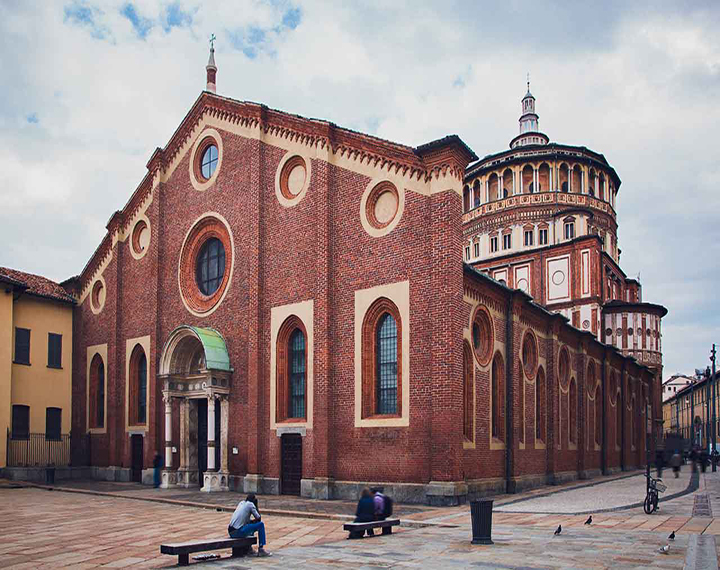
Basilica di Santa Maria delle Grazie
A masterfully designed sanctuary where the artistic soul of Leonardo da Vinci meets the eternal grace of Renaissance architecture. The Basilica di Santa Maria delle Grazie is a UNESCO World Heritage site and the spiritual home to one of the most famous works of art in human history, Leonardo’s Last Supper Museum.This complex serves as an energetic focal point for the 2026 Winter Games, offering travelers a design-forward encounter with the height of Italian genius. The atmosphere is one of sophisticated quietude, where the terracotta brickwork of the church provides an inviting contrast to the hushed, climate-controlled sanctuary of the refectory.
Informational: The complex functions as both an active place of worship and a world-class museum, masterfully designed to preserve the delicate tempera and oil mural of “The Last Supper.” Admission to the refectory is strictly regulated, with small groups permitted entry every 15 minutes to maintain the necessary environmental conditions for the artwork. The basilica itself features an elaborate Gothic interior and a stunning Renaissance tribune, ensuring a seamless and intellectually stimulating experience for visitors navigating the intersection of art and architecture.
Cultural: As a cultural beacon, Santa Maria delle Grazie reflects the sophisticated spirit of Milan, embodying the city’s role as a primary center of the Renaissance. The mural is a masterclass in psychological realism and perspective, capturing the precise moment of human tension that has fascinated the world for centuries. This focus on artistic innovation ensures that the site remains a vibrant part of the global cultural identity, where the legacy of Leonardo continues to inspire a sense of wonder and profound connection to the “Made in Italy” heritage.
Historical: The historical narrative of the site is one of grand patronage and creative transition, commissioned by Duke Ludovico il Moro in the late 15th century as a mausoleum for the Sforza family. The church was masterfully expanded by the architect Donato Bramante, whose design-forward tribune and cloister represent some of the earliest and most influential examples of High Renaissance style. The space is a masterclass in endurance, having miraculously survived the aerial bombardments of World War II, remaining a soul-stirring destination that testifies to the resilience of beauty.
Touristic: For the traveler, the site offers an inviting and exciting opportunity to stand in the presence of a global masterpiece, though booking several months in advance is essential. It rewards the curious visitor with a multi-layered experience, from the vibrant frescoes within the church to the sophisticated serenity of the Bramante Cloister. This soul-stirring destination is a cornerstone of any Milanese itinerary, providing a triumphant and reflective journey into the heart of the 2026 Games’ cultural program.
Rate us and Write a Review
 Open Now~09:00 - 17:30
- Saturday09:00 - 17:30
- Tuesday09:00 - 17:30
- Wednesday09:00 - 17:30
- Thursday09:00 - 17:30
- Friday09:00 - 17:30
- Monday09:00 - 17:30
- Sunday15:00 - 17:30


 Own or work here?
