

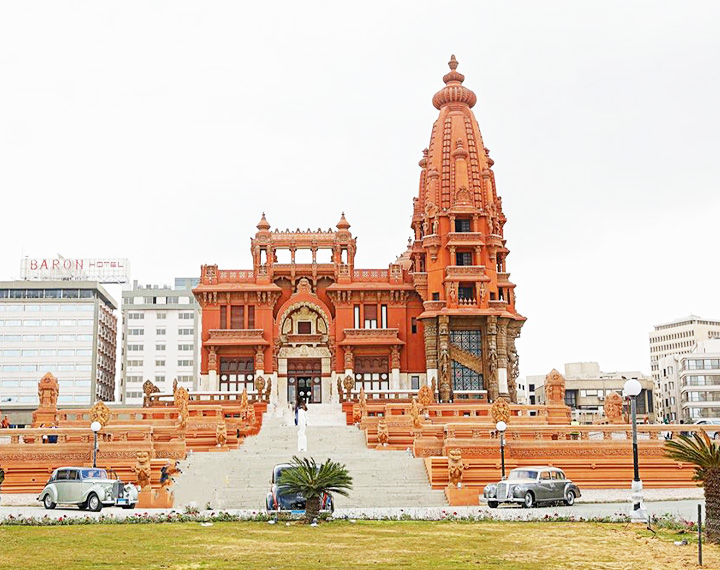
A hauntingly beautiful architectural dream of India rising from the sands of Heliopolis. The Baron Empain Palace stands as one of Egypt’s most enigmatic and breathtaking landmarks, a startling masterpiece of reinforced concrete inspired by the Hindu temples of Odisha and Angkor Wat. Commissioned in the early 20th century by the Belgian industrialist and visionary founder of Heliopolis, Baron Édouard Empain, the palace is a radiant example of architectural fusion. Its tiered towers, intricate carvings of elephants and mythical figures, and terracotta-hued exterior create a striking silhouette that seems to have been transported from the East and placed under the brilliant Egyptian sun.
The architecture of the palace is an informative treasury of early 20th-century innovation and global artistic influence. Designed by French architect Alexandre Marcel, the structure is entirely made of reinforced concrete—a revolutionary technique at the time—and is adorned with a rich tapestry of sculptures depicting serpents, dragons, and celestial beings. Following a meticulous restoration by the Ministry of Tourism and Antiquities in 2020, the interior now serves as an educational museum that documents the history of Heliopolis and the life of the Baron. This cultural sanctuary allows visitors to explore the grand reception halls and the winding staircases, offering a profound sense of the creative ambition that defined the birth of this unique district.
Stepping onto the grounds, the atmosphere is one of overwhelming beauty and historic mystery. The palace is surrounded by lush gardens that have been restored to their former glory, providing a peaceful sanctuary for a slow afternoon stroll. The elevated roof terrace offers an inviting and grand panoramic perspective of the surrounding Heliopolis neighborhood, allowing guests to admire the harmonious blend of Moorish, European, and Art Deco styles that characterize the area. It is a place where the legends of “ghostly hauntings”—which once surrounded the abandoned site for decades—have been replaced by the quiet dignity of a heritage site brought back to life.
The cultural significance of the palace extends beyond its aesthetic brilliance, as it stands as a powerful symbol of the cosmopolitan identity of modern Egypt. It serves as an essential destination for travelers and photography enthusiasts who seek to capture the interplay of light and shadow on its detailed facades. The site features informative bilingual displays and interactive maps that educate observers on the engineering feats required to build a city in the desert. The palace also hosts occasional outdoor cultural events and exhibitions, adding a vibrant and contemporary layer to its historic charm.
Visiting this “Hindu Palace” is a deeply uplifting experience that celebrates the spirit of human vision and the enduring power of architectural storytelling. The sheer detail of the carvings and the unique history of its creator serve as a reminder of the global connections that have shaped Cairo over the centuries. Whether you are mesmerized by the celestial tower or the quiet elegance of the marble floors, the palace offers a moving encounter with a world where the East and West meet in a perfect, shimmering embrace of stone and light.



 Own or work here?