

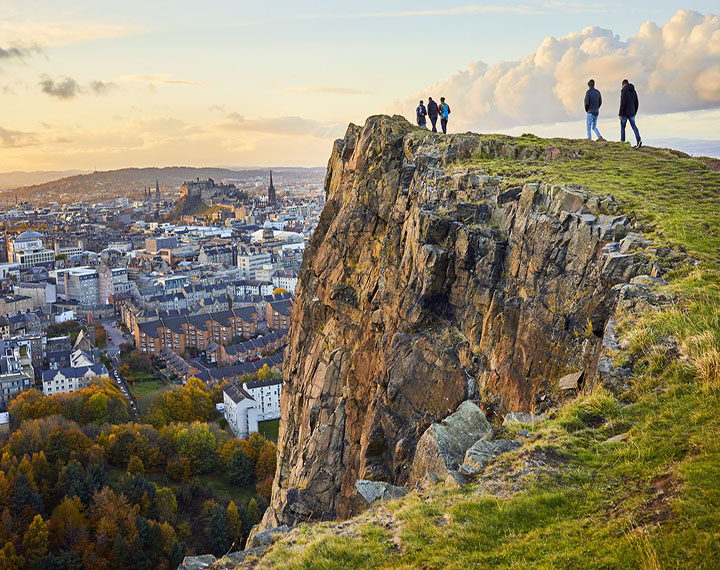
Arthur’s Seat, rising 251 meters above Edinburgh, is a legendary natural landmark nestled in Holyrood Park. Its rugged terrain and grassy slopes attract hikers, photographers, and nature enthusiasts year-round. The hill’s name ties to King Arthur folklore, adding a mythical charm to its appeal. With trails ranging from gentle walks to challenging climbs, it suits all fitness levels. The summit rewards visitors with breathtaking views of the city, the Firth of Forth, and beyond.
Formed by an ancient volcano over 350 million years ago, Arthur’s Seat is a geological wonder. Its rocky outcrops and cliffs reveal Edinburgh’s volcanic history, making it a hotspot for geologists. The hill is part of Holyrood Park, managed by Historic Environment Scotland, ensuring preservation and accessibility. Wildlife thrives here, with birds like peregrine falcons and kestrels often spotted. The serene Salisbury Crags, adjacent to Arthur’s Seat, offer dramatic cliff faces and easier trails.
A cultural symbol of Edinburgh, Arthur’s Seat has inspired poets, writers, and artists for centuries. It’s a must-visit for tourists seeking a blend of adventure and history. Sunrise and sunset hikes are particularly popular for their stunning vistas. The hill is also a venue for events like the annual Beltane Fire Festival. Whether for exercise, solitude, or sightseeing, Arthur’s Seat delivers an unforgettable experience.
No facilities or businesses operate directly on Arthur’s Seat, but nearby Holyrood Palace and the Scottish Parliament enhance its visitor appeal. The lack of entry fees or opening hours makes it accessible 24/7. Local tour companies often include it in guided walks or history tours. Visitors are advised to wear sturdy shoes and check weather conditions before climbing. Its central location makes it a convenient escape from urban bustle.



 Own or work here?