

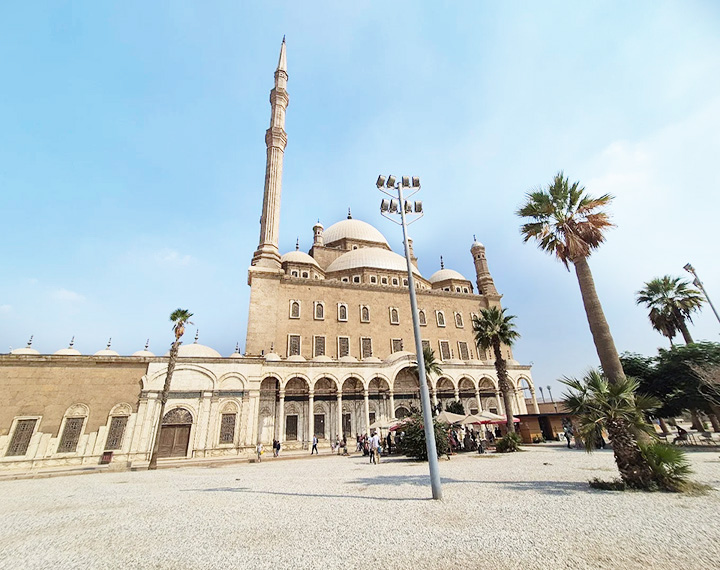
Al-Gawhara Palace, also known as the Jewel Palace, stands as a stunning testament to the nineteenth-century transformation of the Cairo Citadel under the visionary rule of Muhammad Ali Pasha. Built in 1814, this architectural masterpiece served as the private residence for the ruler and his family, intentionally designed to provide a more secluded and intimate alternative to the traditional administrative halls of the era. The palace is celebrated for its unique blend of Ottoman, Baroque, and Rococo styles, featuring delicate plasterwork, ornate wood carvings, and vibrant ceiling frescoes that reflect the artistic cross-pollination between Egypt and Europe during this pivotal historical period.
The culinary and ambiance review of the surrounding grounds highlights a serene atmosphere where the scent of blooming jasmine often drifts through the air, reminiscent of the palace’s original lush gardens. Within the royal halls, visitors can admire an extraordinary collection of eighteenth and nineteenth-century furniture, as well as a magnificent thousand-kilogram crystal chandelier gifted by King Louis Philippe of France. The famous Clock Room and the throne of Muhammad Ali Pasha serve as the focal points of the interior, offering a majestic and informative glimpse into the daily lives and grand ceremonies of the dynasty that founded modern Egypt.
Touristically, the palace provides a culturally significant journey through a series of beautifully preserved rooms, including the opulent reception hall where the Sultan once entertained foreign dignitaries. The building’s location at the southern end of the Citadel offers some of the most breathtaking panoramic views of Cairo, making it an inspiring spot for photography and historical reflection. As a museum, it carefully safeguards a collection of royal portraits, intricate costumes, and personal artifacts, ensuring that the legacy of the Muhammad Ali dynasty remains accessible and engaging for visitors from across the globe.
The historical significance of Al-Gawhara is further enhanced by its resilience, having survived several fires and renovations throughout the centuries to maintain its status as a premier cultural landmark. The palace name, which translates to the Jewel, is said to be inspired by Gawhara Hanem, the last of Muhammad Ali’s wives, adding a poetic and personal layer to the site’s regal history. Today, the palace serves as a vital bridge between the medieval fortifications of the past and the modern administrative spirit of the city, standing proudly as one of the most visited and cherished royal residences in the Egyptian capital.
Visitors to the palace often leave with a sense of wonder at the intricate craftsmanship and the uplifting spirit of innovation that defined the era. The atmosphere within the museum is one of quiet dignity, where every polished floor and gilded mirror tells a story of national pride and cultural evolution. Exploring Al-Gawhara Palace is an essential experience for anyone seeking to understand the transition of Cairo into a modern global metropolis, providing a beautiful and motivating look at the artistry that continues to define the heart of the nation.



 Own or work here?