

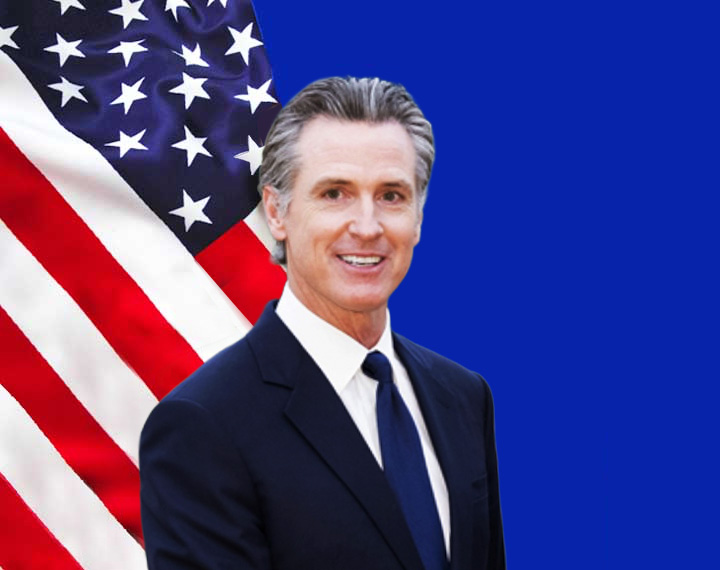
Governor Gavin Newsom embodies a modern vision of public service rooted in courage, innovation, and an unwavering belief in progress. As the Governor of California, he leads the world’s fifth-largest economy with a steady hand and an ambitious spirit, shaping policies that resonate far beyond state borders and influence global conversations on democracy, climate action, and opportunity.
Newsom’s journey in leadership began not in politics, but in entrepreneurship. Rising from modest beginnings, he built successful small businesses that grounded him in the realities of job creation, economic risk, and resilience. That experience shaped his understanding of how policy affects people’s daily lives and instilled a conviction that government should empower, not hinder, aspiration.
His public career has been defined by principled decisions and a willingness to lead at pivotal moments. As Mayor of San Francisco, he gained national attention for standing firmly for equality and civil rights, demonstrating a leadership style that places conscience above convenience. As Lieutenant Governor and later Governor, he expanded that vision statewide, advancing policies focused on economic inclusion, environmental leadership, healthcare access, and innovation-driven growth.
As Governor, Gavin Newsom has navigated California through periods of extraordinary challenge and transformation. From public health crises to climate emergencies, he has emphasised science-based decision-making, transparency, and long-term resilience. Under his leadership, California has reinforced its position as a global leader in clean energy, technology, and cultural influence, while continuing to champion diversity as a source of strength.
At the core of Newsom’s leadership is an enduring optimism about what is possible when people are given the tools to succeed. He speaks consistently about responsibility paired with compassion, accountability balanced by opportunity, and progress anchored in shared values. His approach reflects a belief that government, when guided by integrity and vision, can be a powerful force for good.
Gavin Newsom’s story is one of conviction, adaptability, and forward momentum. It is a reminder that leadership is not merely about managing the present, but about shaping a future worthy of the next generation. Through resolve, empathy, and bold ideas, he continues to inspire confidence in the promise of democratic leadership and the enduring potential of California.
The Governor of California serves as the chief executive of the state, responsible for leading the executive branch of California’s government and ensuring that state laws are faithfully executed. As the highest-ranking official in the state, the governor has the authority to propose the state budget, appoint heads of state departments and agencies, and oversee the administration of public programs. The governor also has the power to sign or veto legislation passed by the California State Legislature, influence policy priorities, and convene the legislature when needed.
In addition, the governor represents California in interactions with other states, the federal government, and international entities, advocating for the state’s interests on economic, environmental, and social issues. The governor serves as the commander-in-chief of the California National Guard (except when federalized) and has the authority to grant pardons and commutations in certain criminal cases. The office plays a central role in shaping the state’s policies, guiding long-term strategic planning, and ensuring public accountability while protecting the welfare and interests of California residents.
The California Governor’s Mansion is the official residence of the Governor of California, located in Sacramento, the capital of California. Built in 1877, the estate was purchased by the Californian government in 1903 and has served as the executive residence for 14 governors since California?s executive mansion, popularly known at the Governor?s Mansion, was built in 1877 for Albert and Clemenza Gallatin. Albert was a partner in the Sacramento hardware store of Huntington & Hopkins. The State of California purchased the house from Joseph and Louisa Steffens to use as a home for California?s first families in 1903 for $32,500. Victorian architecture was somewhat out of style by then, but the house was suitably impressive, conveniently located, and comfortable.
Governor George Pardee, his wife Helen and four daughters were the first residents of the ?new? Governor?s Mansion. During the next 64 years it was home to the families of 12 other governors. Among these were Nina and Earl Warren with six children, and Nancy and Ronald Reagan with their two children. Warren later became Chief Justice of the United States Supreme Court, and Reagan became president of the United States. Today’s guests see marble fireplaces from Italy, gold framed mirrors from France, and exquisitely handcrafted hinges and doorknobs, all of which are reminders of the Gallatins and the Victorian era. Outside some of the Mansion?s abundant vegetation includes flowers, shrubs, and trees dating back to 1877. But when visitors look behind the grape stake fence and see Governor Brown?s swimming pool built in 1959, they are reminded that the Governor?s Mansion State Historic Park is really a walk through time.



 Own or work here?