

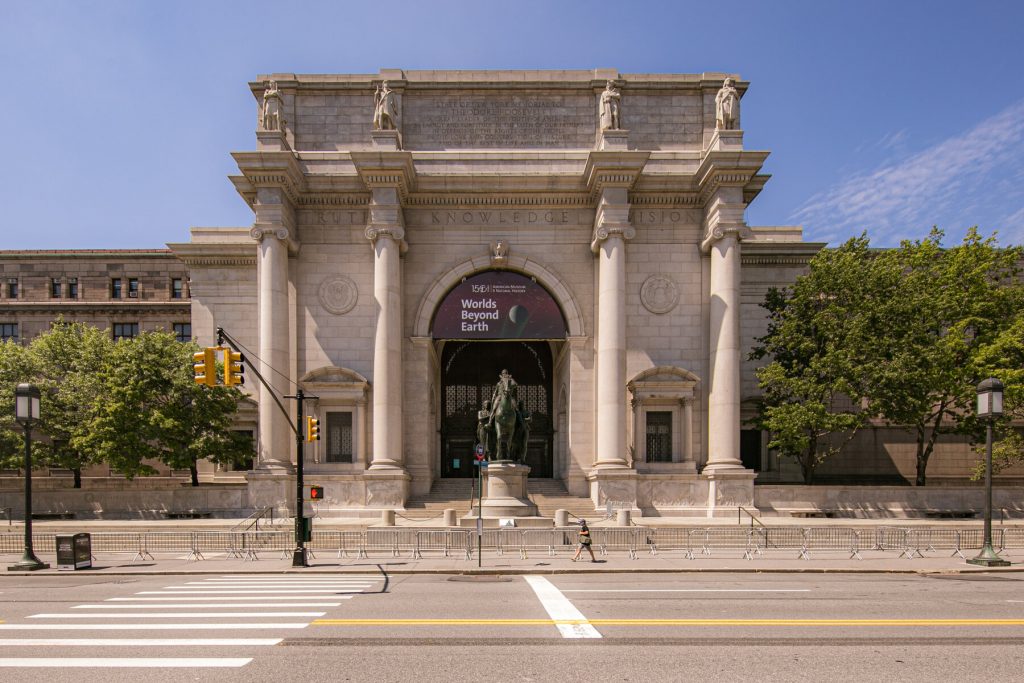
The American Museum of Natural History is a natural history museum on the Upper West Side of Manhattan, New York City. In Theodore Roosevelt Park, across the street from Central Park, the museum complex comprises 26 interconnected buildings housing 45 permanent exhibition halls, in addition to a planetarium and a library. The American Museum of Natural History, founded in 1869, stands as a cornerstone of scientific exploration in New York City’s Upper West Side, spanning 28 interconnected buildings that house over 34 million specimens and artifacts from around the globe. Its origins trace back to a group of prominent New Yorkers, including naturalist Albert Bickmore, who envisioned a public institution to inspire wonder and education about the natural world.
Today, it serves as a vital hub for research, with scientists uncovering new species and insights that shape our understanding of Earth’s history and biodiversity. Nestled along Central Park West, the museum’s iconic architecture blends Beaux-Arts grandeur with modern expansions, drawing millions of visitors annually to its vast halls filled with life-sized dioramas, towering skeletons, and interactive displays. The famed Dinosaur Halls showcase the mighty Tyrannosaurus rex and a full Apatosaurus skeleton, while the Butterfly Conservatory flutters with thousands of live species in a tropical rainforest setting.
Other highlights include the Rose Center for Earth and Space, with its mesmerizing Hayden Planetarium, and the Human Origins hall, which traces humanity’s evolutionary journey through fossils and cultural artifacts. Beyond its exhibits, the museum fosters a deep connection to the planet’s mysteries, offering programs that blend art, science, and storytelling to engage all ages in conservation efforts. From IMAX films on deep-sea adventures to school outreach initiatives, it continues to evolve as a beacon of discovery, reminding us of our place in the vast tapestry of life.



 Own or work here?