

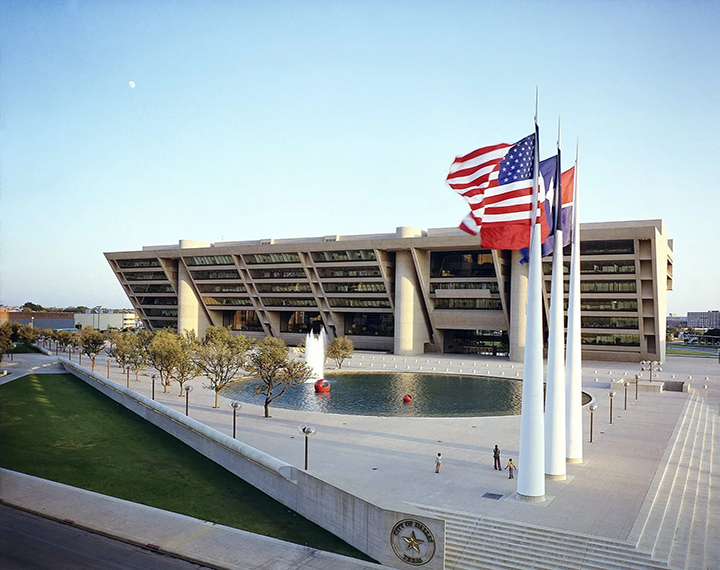
City Hall Plaza in Dallas, designed by the legendary architect I.M. Pei, serves as a massive, open-air concrete civic space that frames the striking, angled facade of Dallas City Hall. Spanning several acres, this modernist plaza is characterized by its vast geometry, minimalist lines, and a dramatic, large-scale reflection pool that mirrors the sky and the surrounding downtown architecture. Over the years, the plaza has functioned as a central gathering point for the community, hosting everything from vibrant cultural festivals and seasonal markets to passionate public demonstrations and civic ceremonies.
While historically dominated by concrete and open paving to match the brutalist aesthetic of the building, recent urban revitalization efforts have breathed new life into the space, aiming to transform it into a more inviting, park-like environment. The introduction of green infrastructure, shading strategies, and native landscaping helps combat the intense Texas heat, turning the stark plaza into a more functional urban park. Visitors can find pockets of grass and shaded seating areas where they can pause and take in the unique architectural views, making it a bridge between the city’s concrete jungle and much-needed public greenspace.
Today, the City Hall Plaza Park area represents a unique juxtaposition of monumental architecture and everyday community life in the heart of Dallas. On any given day, you might see skateboarders practicing tricks across the wide expanses, office workers enjoying lunch near the fountains, or tourists photographing the famous inverted pyramid shape of the city hall building itself. It stands as a testament to how cities can adapt and soften their historical, concrete public squares into dynamic, multi-use parks that cater to the evolving needs of an urban population.



 Own or work here?