

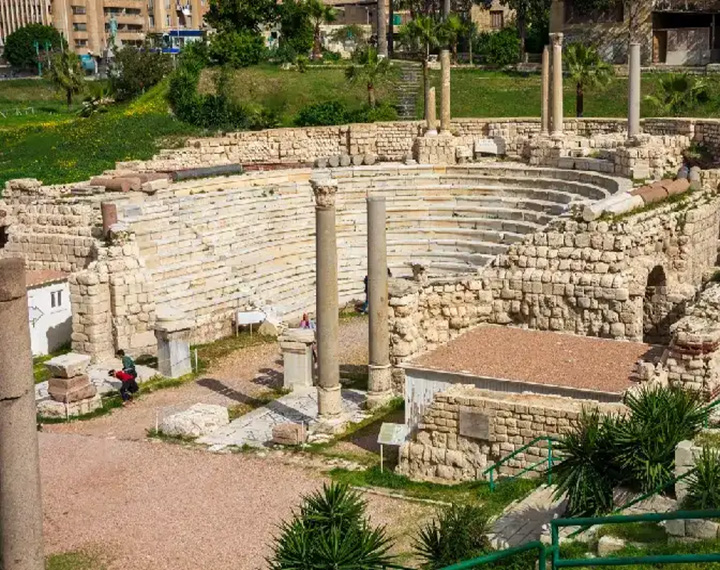
The Ancient Roman Theater in Alexandria, Egypt, stands as a remarkable testament to the city’s rich Greco-Roman heritage. Built in the 2nd century AD during the reign of Emperor Commodus, this open-air amphitheater is one of the few surviving Roman theaters in Egypt. Located in the heart of the Kom el-Dikka archaeological area, it features a semicircular design with thirteen rows of marble seats that could accommodate up to 800 spectators. The theater’s stage area, known as the orchestra, was originally paved with geometric mosaic patterns, some remnants of which are still visible today, showcasing the sophisticated artistry of the period.
Surrounded by the bustling modern city, the theater offers a serene glimpse into Alexandria’s past as a major cultural and intellectual hub of the ancient Mediterranean world. Its preservation is exceptional due to its burial under layers of sand and later Islamic-era structures, which protected it from extensive damage over the centuries. Visitors can explore the well-preserved seating tiers, the vaulted entrances, and the remains of nearby Roman villas and baths, which together paint a vivid picture of daily life in Roman Egypt.
Today, the Ancient Roman Theater serves as a popular tourist attraction and an active archaeological site that continues to yield new discoveries. It highlights Alexandria’s layered history, bridging the eras of the Ptolemies, Romans, and beyond. The site provides a peaceful space for reflection on the enduring legacy of classical architecture and performance arts in one of history’s most cosmopolitan cities.



 Own or work here?