

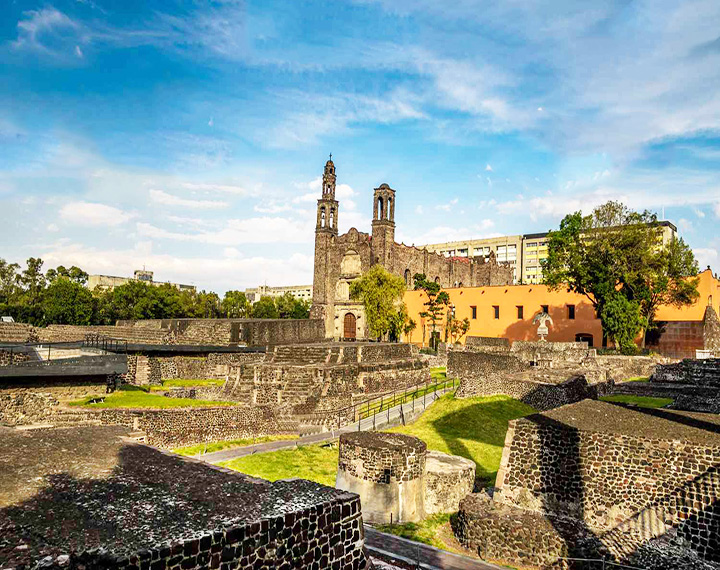
Tlatelolco, centered around the iconic **Plaza de las Tres Culturas** in Mexico City’s Cuauhtémoc borough, stands as a powerful symbol of the nation’s layered history, where pre-Hispanic ruins of a once-thriving Aztec city-state coexist with a colonial church and mid-20th-century modernist structures. Once the sister city to Tenochtitlán and home to the largest market in Mesoamerica, Tlatelolco witnessed the final stand of the Aztecs against Spanish conquerors in 1521, marking a pivotal moment of cultural fusion and transformation.
The plaza invites quiet contemplation amid the excavated pyramids and temples, including the striking Temple of the Paintings and altars that reveal the sophistication of Mexica architecture and daily life, while the serene Templo de Santiago, built in 1609 using stones from dismantled indigenous structures, represents the colonial era’s imprint with its historic significance as the site of the Americas’ first institution of higher learning for indigenous peoples.
In the modern era, the surrounding Nonoalco-Tlatelolco housing complex and the towering building now housing the Centro Cultural Universitario Tlatelolco reflect 20th-century urban ambition, yet the site is forever marked by the tragic 1968 student massacre, commemorated through poignant memorials and the immersive M68 exhibition that honors movements for democracy and human rights.
Visitors can explore the adjacent archaeological zone, stroll the expansive plaza with its evocative inscriptions and sculptures, and delve into the cultural center’s collections, including ancient artifacts and reflections on social resistance.
Experience this evocative space where history’s triumphs and sorrows intertwine, fostering a deeper understanding of Mexico’s resilient cultural tapestry and enduring spirit of remembrance.



 Own or work here?