

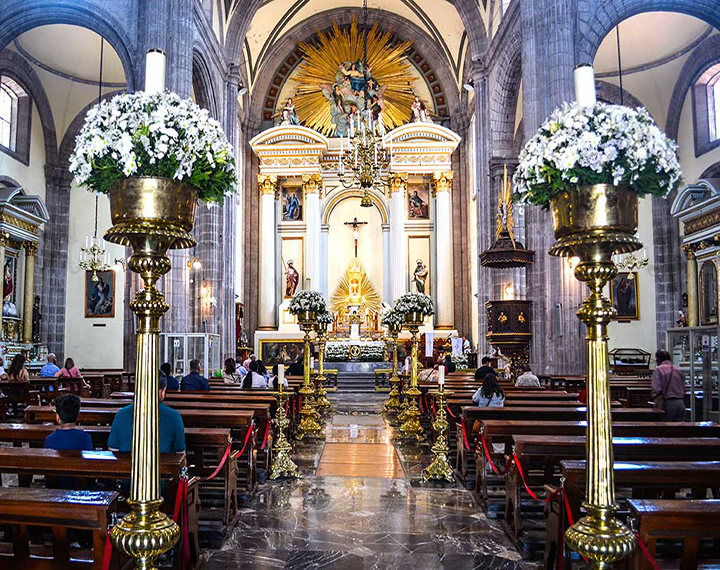
Dominating the northern edge of the vast Zócalo in the historic center of Mexico City, this awe-inspiring edifice rises as the largest cathedral in the Americas and the seat of the Archdiocese of Mexico. Constructed over nearly three centuries from 1573 to 1813 atop the sacred precinct of the ancient Aztec Templo Mayor, it masterfully blends Gothic, Baroque, Neoclassical, and Renaissance styles into a harmonious testament to colonial artistry and resilience. Its towering facade, flanked by bell towers and adorned with intricate sculptures, draws the eye upward, while the vast interior envelops visitors in a golden glow from ornate altars, soaring vaults, and priceless works by masters like Juan Correa and Cristóbal de Villalpando.
Within its sixteen chapels, two monumental organs, and the breathtaking Altar of the Kings, the cathedral preserves a rich tapestry of religious treasures, including the opulent Choir with carved wooden stalls and the somber Crypt of the Archbishops. Despite challenges like gradual sinking into the soft lakebed soil—mitigated by modern engineering—the structure stands firm, its bells ringing out over the plaza in celebration of daily masses, festivals, and national events that continue to weave faith into the fabric of Mexican life.
A visit here transcends architecture, offering a profound encounter with history’s layers, where pre-Hispanic echoes meet colonial splendor and contemporary devotion, reminding all of the enduring power of belief to unite past and present in one sacred space.



 Own or work here?