
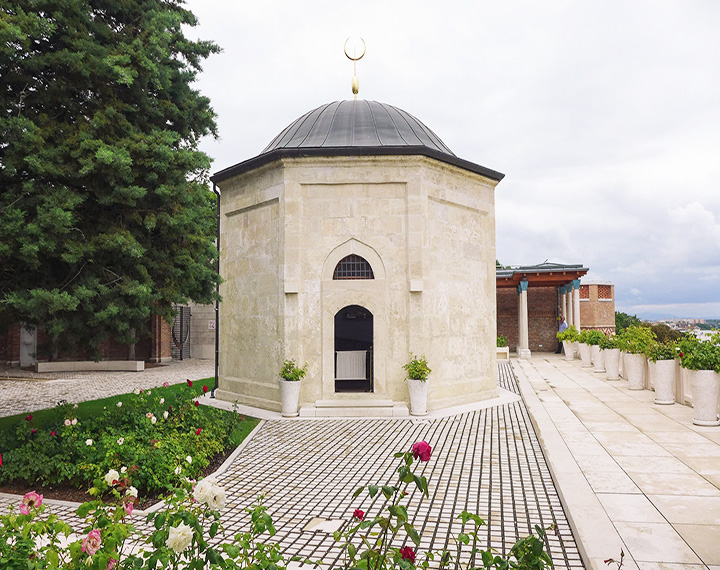
A sacred hilltop shrine honoring a dervish amidst blooming Ottoman roses.
The Tomb of Gül Baba is a unique historical monument located on Rózsadomb, or Rose Hill, serving as a peaceful pilgrimage site and a testament to the Ottoman presence in Hungary. This octagonal funerary chapel, or türbe, was built between 1543 and 1548 by order of Mehmed Paşa to honor a Bektashi dervish known as the Father of Roses. The site is a rare example of original Ottoman architecture in the city, standing as the northernmost Islamic holy place in Europe and offering a serene atmosphere for reflection within its whitewashed stone walls.
Historically, Gül Baba was an influential poet and soldier-monk who arrived in the city during the sixteenth century and was greatly admired for his wisdom and gentleness. Legend suggests that he introduced various species of roses to the region, giving the surrounding district its floral name and establishing a legacy of beauty that persists today. Following a comprehensive restoration project, the complex now features a modern visitor center and museum that provides deep insights into the history of the Ottoman-Hungarian era and the spiritual life of the dervishes.
The cultural significance of the site is elevated by its beautifully terraced gardens, which are meticulously landscaped with lavender, various shrubs, and, most importantly, numerous varieties of roses. These hanging gardens offer a fragrant and colorful path leading up to the tomb, symbolizing the harmony between different historical periods and faiths. Visitors can wander through the colonnaded walkways and find quiet corners that feel worlds away from the urban bustle, making it a beloved spot for both history enthusiasts and those seeking a moment of tranquility.
From its elevated position, the tomb provides breathtaking touristic vistas over the Danube and the rooftops of the city below. The contrast between the ancient stone structure and the surrounding modern villas creates a fascinating architectural dialogue that captures the essence of the capital’s layered past. The site is particularly enchanting in the late afternoon when the setting sun illuminates the golden crescent moon atop the dome, casting a warm glow over the terraced stone steps and the meticulously manicured greenery.
Exploring this landmark offers an uplifting journey through time, where the scent of flowers and the echoes of poetry still linger in the air. The proximity to the historic thermal baths and the traditional neighborhoods of Buda makes it an essential stop for any cultural itinerary. Whether one is admiring the minimalist interior of the tomb or enjoying a quiet moment in the rose gardens, the experience is profoundly informative and provides a beautiful perspective on the shared heritage of the Mediterranean and Central European worlds.



 Own or work here?