
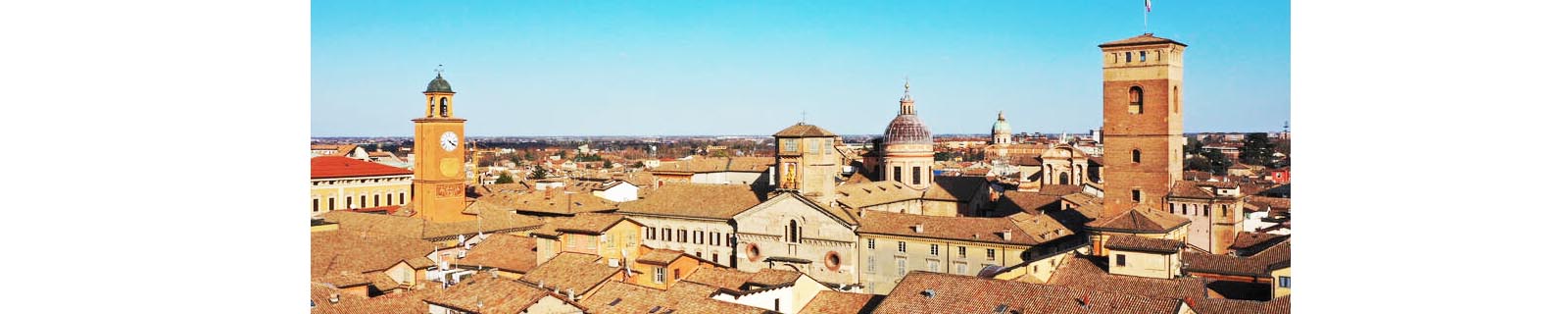
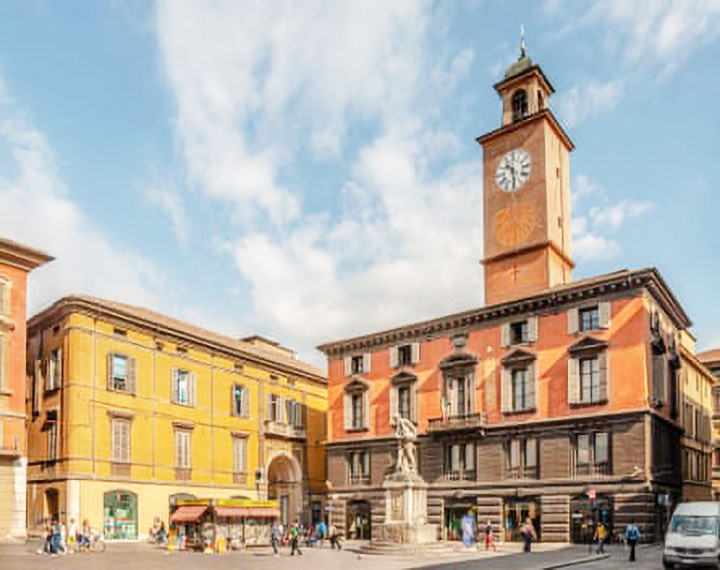
The Palazzo del Comune stands as a monumental landmark in the heart of Reggio Emilia, anchoring the grand Piazza Prampolini with its noble presence. This historic palace has served as the center of the city’s political and administrative life for centuries, evolving from its medieval foundations into a sophisticated architectural complex. Visitors are drawn to its elegant facade and the iconic clock tower that has regulated the rhythm of city life since the sixteenth century. The building represents the enduring strength and civic pride of the community, offering a welcoming gateway to the rich political history of the region.
The architectural heart of the palace is the world-renowned Sala del Tricolore, a stunning neoclassical chamber where the Italian national flag was born in 1797. This hall, with its soaring ceilings and refined white columns, is an essential cultural destination for those seeking to understand the origins of modern Italy. The integration of the Tricolour Flag Museum within the palace walls further enriches the experience, providing an informative narrative that connects the local administrative tradition with the broader story of national unification and democratic ideals.
Cultural life continues to thrive within the palace’s historic corridors, as it remains a functional center for modern governance while hosting prestigious civic ceremonies and educational tours. The building’s layout features a series of beautifully decorated rooms and a central courtyard that reflects the architectural styles of different eras, from the Renaissance to the Enlightenment. This blend of styles illustrates the city’s continuous growth and its commitment to preserving its heritage as a living, breathing part of the urban landscape, making it a source of constant inspiration for residents and guests alike.
For the traveler, a visit to the Palazzo del Comune offers a deep dive into the soul of Reggio Emilia. Its location on the main square makes it a perfect starting point for exploring the surrounding cathedrals and markets, providing a sense of scale and history that is uniquely Italian. The palace is not merely a monument but a symbol of the community’s welcoming and democratic spirit, where the beauty of the past is harmoniously paired with the responsibilities of the present. Walking through its grand portals is a truly uplifting experience that reveals the dignified character of this vibrant Emilian city.



 Own or work here?