

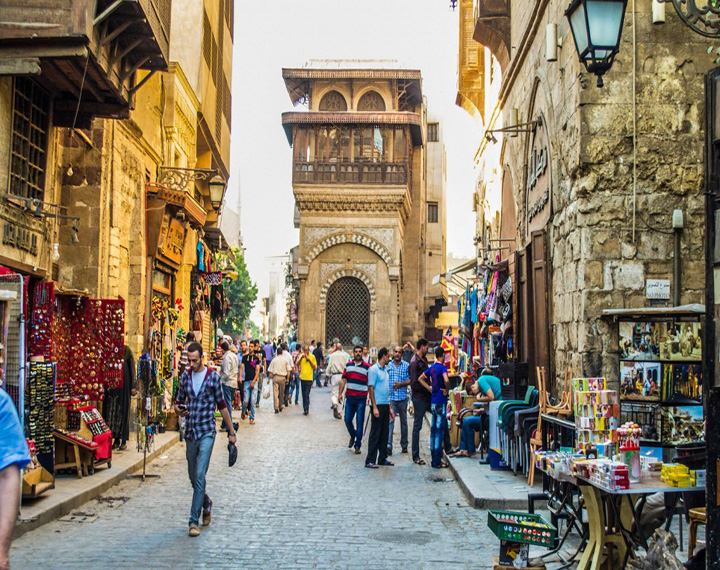
Commonly known as **Al-Muizz Street**, this breathtaking thoroughfare is a primary cultural landmark and a UNESCO World Heritage site. Stretching approximately one kilometer through the ancient walled city, it is a radiant sanctuary of history that contains the greatest concentration of medieval architectural treasures in the Islamic world. Walking down Al-Muizz is an informative and moving encounter with the “Renaissance” of Fatimid, Ayyubid, Mamluk, and Ottoman design, offering an uplifting journey through a thousand years of Egyptian heritage.
The architecture of Al-Muizz Street is an informative display of spiritual and civic grandeur, meticulously managed to preserve its legendary dignity. The street is lined with a celebratory array of mosques, madrasas (schools), sabils (public water fountains), and palaces. The interior aesthetics of these structures feature intricate marble mosaics, soaring domes, and “Mashrabiya” woodwork that create a sense of sanctuary and permanence. This cultural hub serves as a living bridge between Cairo’s medieval past and its rhythmic modern energy, providing a grand panoramic perspective of the city’s visionary craftsmanship.
### Key Architectural Landmarks
* **Complex of Qalawun:** A world-class masterpiece of Mamluk architecture, featuring a breathtaking hospital, madrasa, and mausoleum known for its intricate stucco and marble.
* **Mosque of Al-Hakim bi-Amr Allah:** A majestic and airy sanctuary at the northern end, characterized by its unique minarets and expansive open courtyard.
* **Bab al-Futuh & Bab al-Nasr:** The grand, fortified gates of the Fatimid city, standing as timeless sentinels of Cairo’s defensive history.
* **Sabil-Kuttab of Abdel Rahman Katkhuda:** A professional and picturesque display of Ottoman-era public architecture, famous for its ornate tilework.
* **Al-Aqmar Mosque:** A celebratory and rare example of a Fatimid-era decorated stone facade, featuring symbolic carvings that are a delight for architectural students.
For the modern traveler and digital creator, Al-Muizz Street offers a multifaceted landscape for discovery. At night, the street undergoes a transformative evolution as professional lighting illuminates the minarets and domes, creating a shimmering and radiant atmosphere. The area is also a vibrant social hub, home to:
* **Beit al-Suhaymi:** An inviting and hospitable Ottoman-era house that offers an educational look at traditional domestic life.
* **Artisanal Workshops:** The nearby **Khan el-Khalili** and **Al-Khayamiyya** (Tentmakers’ Street) provide a moving encounter with the city’s enduring craft traditions, from copper engraving to textile art.
* **Historic Cafés:** Strategically located spots like **El Fishawy** offer a characteristically warm Egyptian welcome, providing a picturesque pause for an afternoon of exploration.
The cultural spirit of Al-Muizz is defined by its role as an inclusive stage for the city’s social life. It remains a timeless sentinel of identity, where the scent of incense and the sound of the *Adhan* (call to prayer) mix with the energetic pulse of the local markets. The professional management of the pedestrian zone ensures a secure and hospitable environment, allowing every visitor to feel a profound sense of connection to the “Mother of the World.”
Visiting Al-Muizz Street is a transformative experience that honors the beauty of the human spirit and the resilience of stone. It reminds every guest that history is not just a collection of dates, but a living, breathing dialogue that continues to shape our understanding of the world. Whether you are mesmerized by the glow of the Sultan Barquq mosque at dusk or inspired by the communal joy of a street performance, Al-Muizz remains the radiant heart of Cairo, inviting the world to witness the shimmering



 Own or work here?