

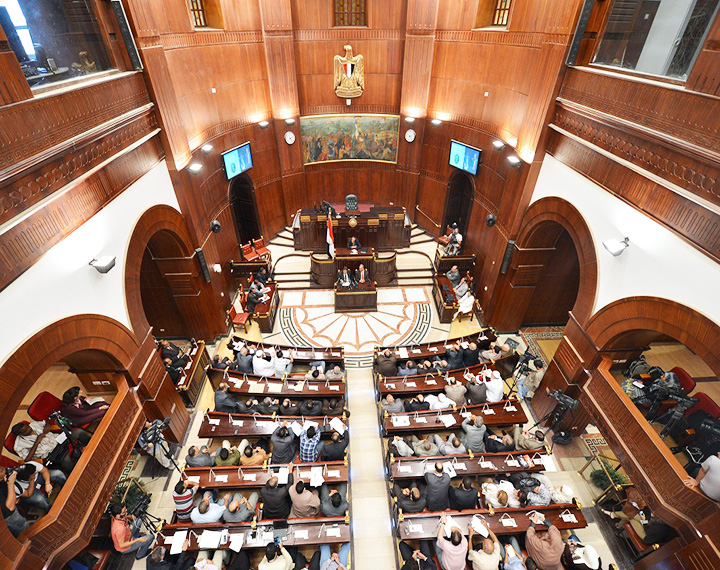
The Egyptian Shura Council, often translated as the Consultative Assembly, was historically the upper chamber of Egypt’s parliament, created in 1980 as part of a bicameral legislative system. Its name derives from the Arabic concept of “shura,” meaning consultation, reflecting its intended role as a forum for deliberation and national dialogue.
Structured to balance elected representation with presidential appointments, the council typically combined directly elected members with those appointed by the president, serving staggered terms to ensure continuity. This hybrid composition was designed to bring both political legitimacy and experienced voices into the legislative process.
In practice, however, the Shura Council held largely advisory powers. It reviewed draft legislation, constitutional amendments, and national policies when referred to it, but ultimate legislative authority rested with the lower house, the People’s Assembly.
Critics often argued that its limited influence reduced it to a consultative body with minimal real impact on lawmaking. Following the political transformations after the 2011 revolution, debates intensified حول its relevance. The council was formally dissolved in 2013 and removed under the 2014 constitution, largely due to concerns about inefficiency and lack of authority.
Yet Egypt later returned to a bicameral structure. Constitutional amendments in 2019 reintroduced an upper chamber—now called the Senate—reviving the consultative tradition of the Shura Council while reshaping its structure and role within modern Egyptian governance



 Own or work here?