

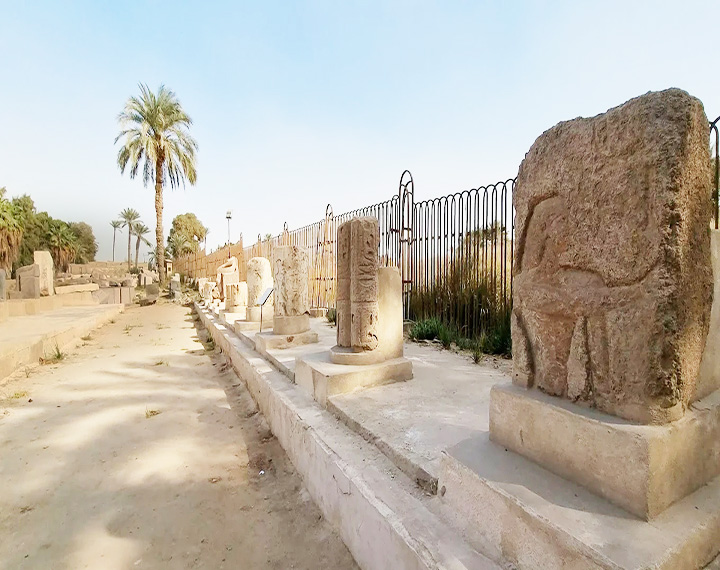
Set quietly within the lush Nile valley near Cairo, the Memphis Egypt reveals the remnants of one of the world’s earliest and most influential capitals. Founded over five thousand years ago, Memphis once stood as the political and cultural heart of ancient Egypt, guiding the nation through its earliest dynasties and shaping its enduring legacy.
Today, the site unfolds as an open-air museum, where scattered statues, fallen columns, and temple remains offer glimpses into a once-grand city. Among its most captivating treasures is the colossal limestone statue of Ramses II, resting serenely as a powerful symbol of Egypt’s ancient rulers and their remarkable achievements.
Nearby, the elegant Alabaster Sphinx adds another layer of intrigue, carved with delicate precision and embodying both strength and mystery. These surviving masterpieces stand amid palm groves and cultivated land, creating a striking contrast between the ancient and the living landscape that surrounds them.
Unlike the towering monuments of nearby sites, Memphis invites a more contemplative experience. Its ruins speak softly, encouraging visitors to imagine the grandeur that once filled this space, from bustling markets to royal ceremonies along the Nile’s edge.



 Own or work here?