

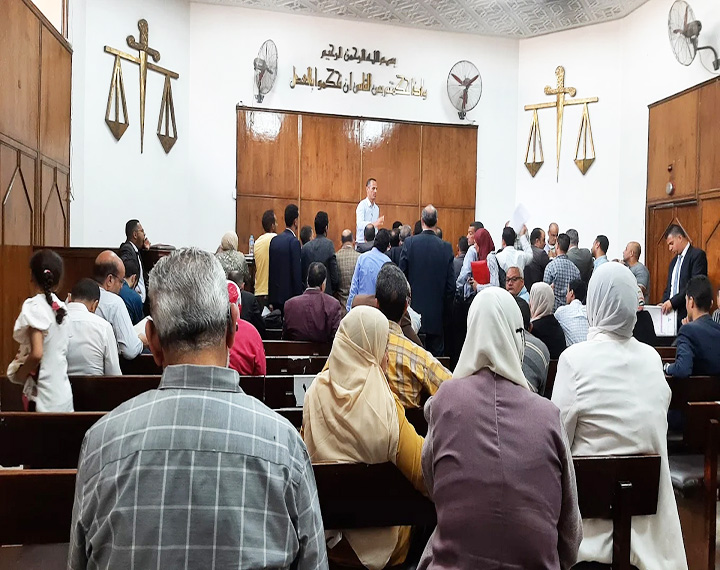
The Headquarters of the Egyptian Council of State (Majlis al-Dawla) is a breathtaking architectural and judicial landmark located along the Giza Nile bank in the Dokki district. Established in 1946 and inspired by the French *Conseil d’État*, the Council serves as an independent judicial body and a primary pillar of the Egyptian legal system. The building itself is a striking presence on the riverfront, directly across from the Cairo Yacht Club, representing the dignity and permanence of administrative law in Egypt. Its position near the historic heart of the city makes it an essential site for understanding the modern “Renaissance” of the nation’s legal and professional institutions.
The architecture of the headquarters is an informative blend of mid-century monumentalism and Neo-Classical influences, featuring a grand facade with clean, powerful lines that command respect. The building is meticulously managed to serve the highest levels of the Egyptian judiciary, housing the Higher Administrative Court and the State Commissioners’ Body. Inside, the grand halls and hearing chambers are designed with a professional and inviting scale, prioritizing natural light and a sense of quiet authority. This cultural hub is more than an office; it is a repository of legal history, where the fundamental principles of the relationship between the state and its citizens are balanced and upheld.
For the modern traveler or student of history, the area surrounding the headquarters offers an inviting and grand panoramic perspective of the Nile. The building is situated in a leafy, elite pocket of Giza, characterized by its proximity to foreign embassies, the Cairo Opera House, and the botanical gardens. The atmosphere is one of serene professionalism, providing a peaceful sanctuary for a slow afternoon stroll along the riverbank. The site serves as a vibrant bridge between the city’s administrative core and its recreational waterfront, where the quiet dignity of the law meets the lively pulse of the city’s nautical social life.
The cultural significance of the Council of State extends beyond its legal functions, as it stands as a symbol of the cosmopolitan and intellectual identity of contemporary Egypt. It is a place where the legends of historical legal battles are preserved, offering a moving encounter with the evolution of the Egyptian state. The site’s architectural permanence mirrors the endurance of the Nile itself, reminding every observer of the visionary ambition required to build a modern legal system in the cradle of civilization. Whether you are admiring the building from a passing boat or walking through the professional district of Dokki, the headquarters offers a profound sense of the creative power that defines the spirit of Egyptian governance.
Visiting the area around the Council of State is an uplifting experience that celebrates the harmony of heritage and order. It remains a timeless sentinel on the Giza bank, inviting every visitor to witness the radiant and shimmering heart of the city’s judicial heritage. It is a place where the East and West—and the past and future—meet in a perfect, stable embrace of stone, law, and light.



 Own or work here?